What to Get a Parent in a Care Home This Christmas
You've probably already had the thought: buying a present for someone who no longer has anywhere to put it. Or the thought underneath that one, that whatever you choose will just prove you don't see them as often as you'd like to. Both feelings are common at exactly this point in the year, and neither means you're getting this wrong. This guide works like a decision, not a list. Find the situation that matches your parent right now and the choice gets a lot clearer. If your dad insists he wants nothing, your mum can't quite place your last visit, or the room she shares has no space left for anything at all, there's a specific answer for that, not a generic one for 'elderly parent.'
She says she doesn't want anything
This is the line almost every caregiver hears at some point, usually delivered flatly, sometimes with a bit of irritation that you asked at all. It's rarely a rejection of gifts as a concept. More often it means the things she used to want, more stuff, more choice, don't interest her anymore, because she has almost no say over where anything goes or how long she keeps it. A parent who has lost control over her daily schedule, her meals, her room, is telling you something true: she doesn't want another object to manage. What she's not saying, because it sounds like an accusation, is that she wants more of your time.
Take her at her word on the object and ignore it on the time. Pair something small and modest, the kind of thing that fits in a single drawer, with something she can actually look forward to: a named date on the calendar for your next visit, a phone call booked for the same time each week, or a parcel of family news and photos to open on a day you're not there. The objectively better gift might not be wrapped at all. It's a Tuesday with your name already on it.
In Ireland, ostentatious or visibly expensive gifts can trigger 'notions', social discomfort at seeming to show off, even when the intention is entirely loving. In the UK, a typical spend on a parent at Christmas is £31 to £50. Both point the same way: guilt about a parent's care-home placement often pushes people toward a bigger gift as compensation, and in both cultures, bigger usually reads as overcompensation rather than generosity.
She's still the one who runs the table
Some parents in care remain exactly who they always were: the one who organises the card game, remembers everyone's birthday, holds court at mealtimes. For this parent, a gift that sits alone on a shelf is a missed opportunity. She doesn't want comfort. She wants something to do with the people around her, whether that's family visiting for an afternoon or the residents she's decided are now her people too.
Choose something built for sharing rather than owning: treats that split into individual portions across a dayroom table, or something that gives her a reason to host. At the upper end of a typical budget, a modest bottle to share during a visit can work well, provided you've checked medication interactions and the home's alcohol policy with staff first, since both vary from home to home and neither is worth guessing at. At the lower end, a shareable treat that portions out easily does the same social job without the paperwork.
Before you order any food or drink, call the home and ask what's currently suitable. Dietary needs and swallowing ability change, sometimes between one visit and the next, and a two-minute phone call prevents a gift that has to be quietly binned once it arrives.
Something's shifted since your last visit
You don't need a diagnosis to notice it: she's told you the same story twice in one call, or she seemed unsure who was visiting until you were halfway through the door. This is a genuinely different situation from the sharp, social parent, and it calls for a different instinct. Novelty, the new gadget, the unfamiliar hobby kit, becomes a liability here rather than a delight, because it asks her to learn something at a moment when learning is exactly what's getting harder. Familiarity is doing the work that surprise used to do.
Anchor the gift in something she already knows rather than something new: a specific song from a specific decade, a scent she's worn for thirty years, photographs clearly labelled with names on the back in permanent marker, not just displayed. The content should point backward to a life she remembers clearly, not forward to a skill she'd have to build. Skip anything that needs instructions, batteries she'd have to change, or steps she'd have to remember.
There's nowhere to put anything
A shared room with one shelf and a bedside drawer is a real physical constraint, independent of how sharp or how forgetful your parent is right now. It applies just as much to the parent who's completely herself as to the one who's changed. The instinct to buy something that shows how much you care by way of size, a large photo album, a heavy throw, a substantial ornament, runs straight into this constraint and loses. It ends up in a cupboard, or it doesn't fit at all, and a staff member has to find somewhere to put it, which becomes one more small task for someone already managing dozens of residents.
Default to consumable or genuinely pocket-sized. A compact fragrance in a small bottle solves the shelf problem outright while still saying something personal. A single cushion cover on her usual chair changes how one square foot of the room looks without adding a new object to store once it's worn out. If you're tempted by anything bigger than a shoebox, ask yourself where exactly it will live in a room she shares with a stranger. If you can't answer that in one sentence, choose something smaller.
In the UK, avoid white lilies and all-white arrangements, as a gift or as an accompaniment to one. They carry a strong funeral association there, which lands harder in a care-home context than almost anywhere else. If you're sending a wallet or purse, tuck a small coin inside first; an empty one is considered bad luck under UK tradition, small enough to seem silly to ignore, and easy enough to fix.
Before you order anything
A gift card from a shop they'd actually use is a genuinely useful fallback if you're unsure what will fit your parent's space or dietary situation. It's flexible enough to let staff or family buy the right thing locally once they know more than you do from a distance.
Euphora earns a commission when you buy through these links, at no extra cost to you. How we're paid
Picked and ranked for fit to a parent at Christmas. Written by Eudora, reviewed by Euphora's founder before publication. Full method: how we choose and rank.
Gift ideas
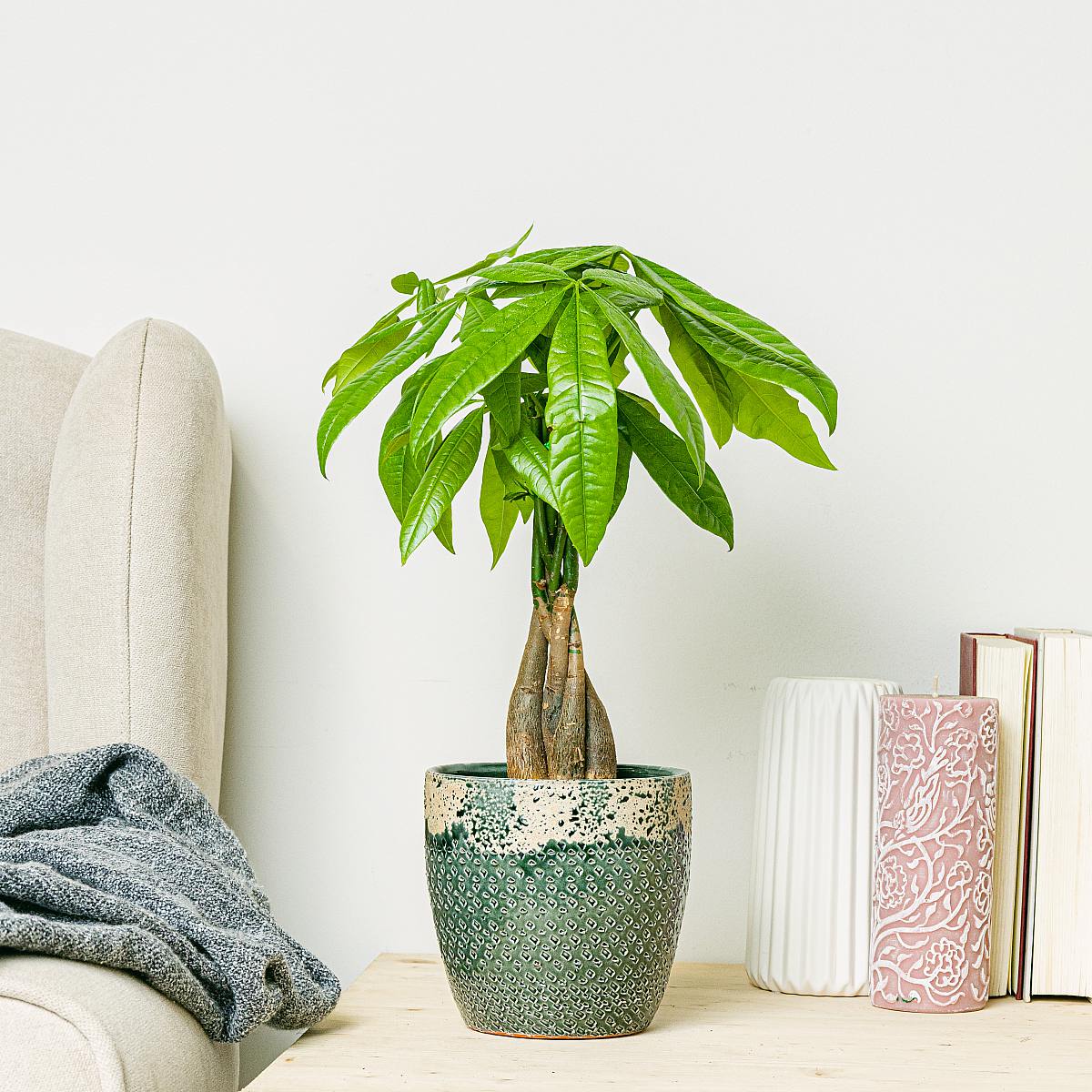
Stands out with its braided stem and air-purifying qualities, offering both aesthetic appeal and functional benefits.
Not ideal if Size may be impractical for small spaces.

Professional Italian Truffle Shaver with Rosewood Handle
£39.95from TruffleHunterShips internationallyStands out with its hand-crafted Italian design and adjustable blade, offering precision and versatility for shaving truffles, cheese, and more. A hand-crafted Italian kitchen tool featuring a rosewood handle and adjustable stainless steel blade designed for shaving truffles paper-thin.
Not ideal if The blade requires careful handling to avoid injury.

Unlike generic baubles, these are hand-hammered by artisans using traditional techniques, ensuring each piece is unique. The brass material and velvet ties add a touch of luxury and durability.
Not ideal if Not suitable for households with very young children due to small parts.
More gift ideas

The reusable wicker basket and tasting notes elevate this hamper beyond a standard chocolate gift, offering a guided and luxurious experience.
Not ideal if Contains chocolate, which may not suit recipients with dietary restrictions or allergies.

The letterbox-friendly delivery and curated selection of British charcuterie set this hamper apart, offering convenience and quality in one package.
Not ideal if Contains meat, which may not suit vegetarians or those with dietary restrictions.

The oakmoss, cedarwood, and amber scent profile sets it apart from floral or fruity body care sets. Includes a natural exfoliating body wash, oil-rich body cream, shea-infused hand cream, and triple-milled hand & body soap — each in 75ml or 40g sizes.
Not ideal if Scent preferences are subjective; some may not enjoy earthy aromas.
Still weighing it up? Tell us a bit about your parent's mobility, memory, and room situation, and our finder turns the categories in this guide into a shortlist built around them specifically.
AI reads what you write; our code then picks the gifts. How it works
Where to shop
Click any shop to preview what they offer.
Chocolate can be shared around the room and leaves nothing behind to store, a fit for a space with little room to spare.
Ships across Europe, plus Australia, Canada and New Zealand
Browse Cadbury Gifts DirectA treat from a gourmet hamper needs no kitchen and nothing to store afterwards, workable within a shared room's limits.
Ships worldwide
Browse TruffleHunterSmall and soft, a silk scrunchie or eye mask is comfort that's easy to keep with them and doesn't need much space or care.
Ships worldwide
Browse MayfairsilkQuestions people ask
What do you buy someone in a nursing home for Christmas?
The honest answer depends more on which situation your parent is in than on the object itself. In the UK, a typical spend on a parent at Christmas is £31 to £50. In Ireland there's no equivalent figure, but a similar €30 to €50 range is a reasonable estimate. Either way, matching the gift to their current mobility, memory, and space matters more than the price tag.
What can you give a dementia patient for Christmas?
Beyond choosing something familiar over something new, keep the physical experience simple: one gift at a time rather than an armful, wrapping she can open without help, and nothing with small loose pieces that could be a choking risk. Overwhelm is as much a concern here as the gift's content.
Can you send gifts directly to a care home resident?
Generally yes, but every home has its own process for accepting post and parcels. Call ahead, address the parcel with your parent's full name and room number, and expect December's parcel volume to slow things down. A two- to three-week buffer beyond standard delivery estimates is a sensible precaution.
What should you not bring into a care home as a gift?
In the UK, avoid white lilies or all-white arrangements, given their funeral association. Avoid an empty wallet or purse; a small coin inside sidesteps the UK superstition around bad luck. And avoid anything oversized with no realistic storage spot, regardless of superstition, simply because of shared-room space.
What do you get an elderly parent who has nothing left to want?
Usually the answer isn't a better object, it's a better plan for time. A modest gift paired with a scheduled visit, call, or a specific activity during your next visit tends to land better than a search for the one perfect item, because the plan is the part she can't already predict.
How much should you spend on a gift for a parent in a care home?
£31 to £50 is the documented UK norm for a parent at Christmas; Irish research doesn't confirm an exact figure, though €30 to €50 is a reasonable estimate. In Ireland, overspending can trigger social discomfort known as 'notions.' In both markets, the point isn't the ceiling, it's resisting the guilt-driven splurge.
You came here worried about getting this wrong: a jumper going missing in the wash, a photo album gathering dust in a cupboard nobody has room for. That worry is proof you're paying attention, not evidence you've become distant. The gift itself will likely be modest, because the room is small and the rules are real. What it's standing in for, a visit, a call, a name written on the back of a photograph, is not modest at all.
Euphora helps you find the right gift — with tailored recommendations, gift guides, and specialist retailers we've vetted ourselves.