Gifts for the Friend Who Actually Checks the Supply Chain
You know your friend will read the label. Maybe not out loud, but they'll turn the packaging over, check for a real certification instead of a green logo, and you'll know instantly whether you did the work or reached for the first thing that looked eco enough. That's not paranoia on your part. It's a fair read of someone who composts without being asked and has spent years rebuilding their habits around actual impact, not appearance. This guide skips the starter-kit suggestions. It helps you read how far your friend has taken those habits, then choose something whose sourcing you can check yourself.
Top picks for UK delivery
Euphora earns a commission when you buy through these links, at no extra cost to you. How we're paid
- Tillandsia Kokedama — 35cmShips across Europe

A striking Tillandsia air plant mounted in a traditional Japanese kokedama moss ball, standing 35cm tall, a soil-free alternative to a traditional potted plant.
Not ideal if Needs occasional misting to thrive, not a fit for a recipient who wants a zero-maintenance plant.
View at Be.Green Plant Design · €46 - Recycled Iron Endo VaseShips to UK

Unlike mass-produced vases, this piece is hand-forged from recycled iron, ensuring each vase has slight variations and a story. Its sculptural design and visible soldering marks make it a conversation starter.
Not ideal if The industrial aesthetic may not suit all tastes, and the weight of the iron could make it less practical for frequent moving.
View at nkuku · £42 - Ata Rangi Crimson Pinot Noir 2023Ships across Europe

Unlike standard wines, this Pinot Noir supports Project Crimson, a conservation effort for endangered native trees, adding a layer of purpose and meaning to the gift. Its New Zealand pedigree and aging potential further elevate its appeal.
Not ideal if Requires knowledge of wine storage and serving.
View at 8wines DACH · €33.99
Picked and ranked for fit to a close friend, just because. Written by Eudora, reviewed by Euphora's founder before publication. How we chose: our engine matched products from the shops we work with to this friend, using each product's own details, and we did not test or rate any product's environmental performance. Where a pick names a material or a certification, that is the shop's own statement; the date beside the picks shows when prices were last read. Full method: how we choose and rank.
Prices from the shops' feeds, 19 October 2026.
Where your friend actually sits on the sustainability spectrum
Sustainability isn't one setting. Some friends recycle diligently and call it done. Others have spent years reducing single-use packaging, buying in bulk, refusing anything wrapped in plastic they can avoid. A smaller group has gone further still, sceptical of consumption itself, buying less on principle rather than just buying different things.
Work out which one you're buying for before you pick anything. A casual recycler will appreciate a well-made object whose maker explains where it comes from. They won't interrogate the supply chain, but they'll notice if you clearly didn't either. Someone deeper into zero waste wants proof: a named source, a documented process, a material claim that holds up. A friend leaning toward degrowth might not want a new object at all, however good the story behind it.
Get this read wrong and even a well-researched gift can miss. Buy an entry-level swap for a zero-waste purist and you'll signal you weren't paying attention to who they've become. Hand a consumable to someone who'd rather you donated the money, and you've solved the wrong problem entirely.
The instinct to buy a reusable straw, bamboo cutlery set, or canvas tote is understandable. They're the default suggestion in most gift guides, and they were genuinely useful once. A friend who's been doing this for years solved that stage long ago. Ask what they still find difficult, repairing things, sourcing locally, or simply finding time, and gift toward that gap instead.
How to tell a real sourcing claim from a green label
A leaf logo tells you nothing. Neither does kraft paper packaging or the word 'eco' printed somewhere on the box. Your friend knows this already, it's exactly the kind of claim they've learned to distrust. What actually holds up under scrutiny is specific: a named farm or region, a documented conservation programme, a stated material origin you could look up yourself if you wanted to.
The test is simple. Read the product description and ask whether the sustainability claim survives being made specific. 'Ethically sourced' fails, it's marketing language with no content behind it. 'Grown at a named vineyard that funds a native tree conservation programme' passes, because you could go check. If a product's only sustainability signal disappears once you remove the adjectives, skip it. Verifiable specifics carry the claim; impressive language doesn't.
The one category where a new object still earns its place
New objects are the hardest sell for this friend, and jewellery is usually the worst offender: unclear metal origin, unclear labour conditions, a story invented after the fact rather than built into how the thing was made. Most gift guides recommend jewellery anyway, on the assumption that anything wearable reads as thoughtful.
It doesn't, not automatically. What changes the calculation is an explicit, checkable material claim: recycled sterling silver rather than 'ethically sourced' silver, a stated percentage rather than a vague gesture toward responsibility. The point isn't the material itself, it's whether the claim can be checked. Add a personalisation option and you've shown you thought about this specific friend, not the category of 'sustainable jewellery' in general.
In many gift-giving traditions, showing off what something cost undercuts the gesture rather than strengthening it. If your friend already leans toward reducing consumption, that instinct works in your favour: say 'I saw this and thought of you,' not 'I spent ages finding this.' Modest, well-made gifts read better here than expensive ones, not worse.
More ways to say 'I see you'
More ways to show you've been paying attention — different angles on the same thoughtful instinct.
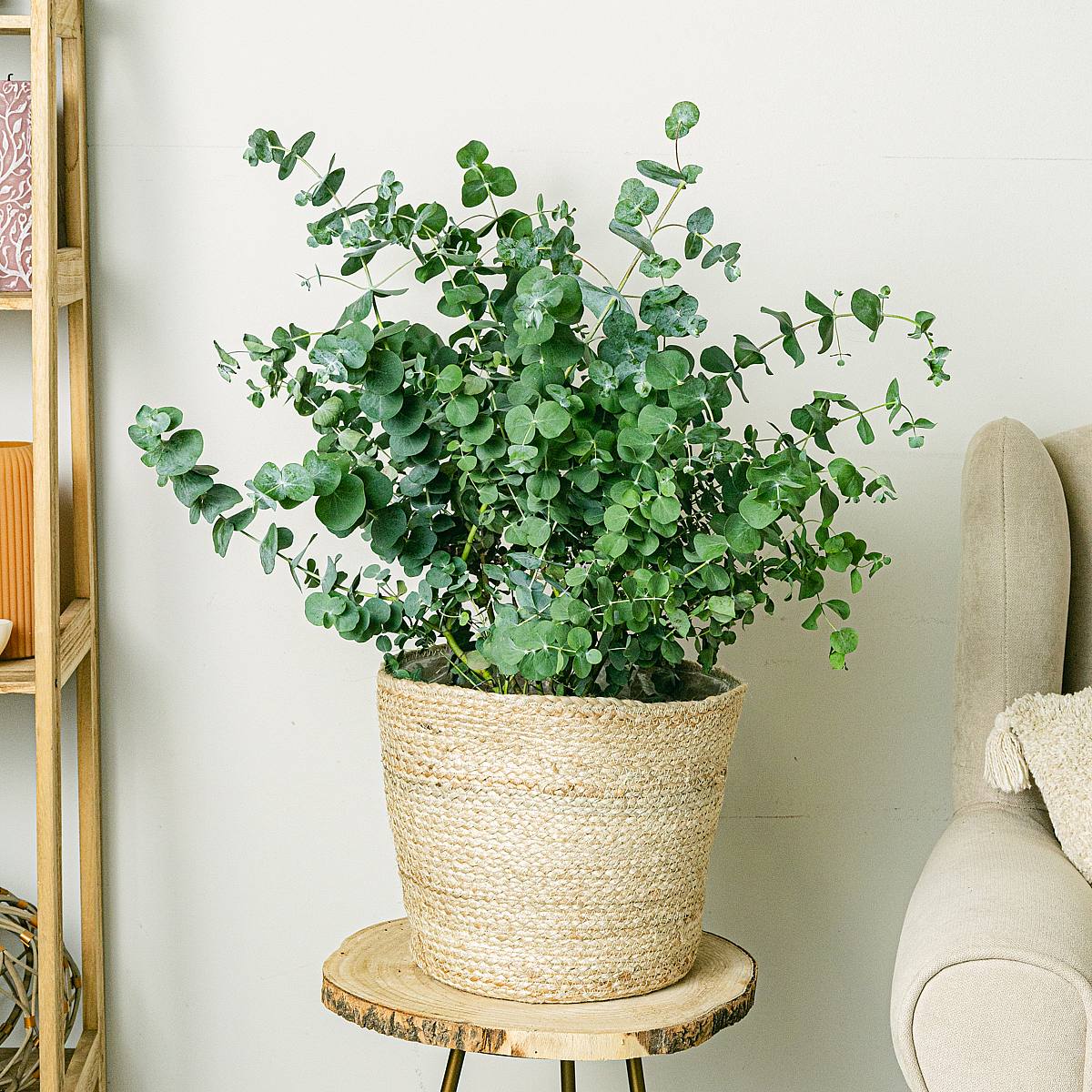
The eucalyptus plant stands out for its distinctive silvery-green foliage and invigorating aroma, offering both aesthetic and sensory appeal that sets it apart from typical houseplants.
Not ideal if Recipient must have an interest in plants or gardening.

The oldest vines on Rijk's Estate lend this Pinotage exceptional depth and character, making it a standout choice for those who enjoy rich, full-bodied wines. This rich ruby red wine displays dark fruit aromas with hints of white pepper, raspberry, and cocoa, developing sumptuous flavours of cassis, blueberry, and red cherry with elegant spice and oak notes.
Not ideal if Recipient must enjoy bold, fruity red wines.

Stands out by combining a gripping crime narrative with historical elements, specifically the legend of Cleopatra's papyrus. Offers a unique angle for fans of both genres.
Not ideal if May not appeal to readers who prefer lighter genres or non-fiction.
Give something that grows instead of something that's made
Every object you give adds to what your friend has to store, maintain, or eventually get rid of, a real cost for someone actively trying to own less. A living gift sidesteps that problem almost entirely. It's not another possession, it's an ongoing small relationship between your friend and the thing you gave them, one that needs care rather than storage.
This works especially well once a friend has moved past the basic swaps and started questioning consumption itself. A plant asks for care. It doesn't ask your friend to acquire anything, which makes it easier to defend to someone actively trying to own less. The sourcing question gets easier too, since there's no supply chain to interrogate beyond the nursery it came from.
Not sure if any of these actually match how your friend does sustainability, zero waste, vegan, local-only? Tell us their specific priorities and we'll narrow it down.
AI reads what you write; our code then picks the gifts. How it works
Sometimes the most thoughtful gift isn't a thing
Here's the opinion most gift guides won't state outright: if your friend leans toward reducing consumption on principle, buying them another object, however well-sourced, can work against the point they're actually trying to make. A verified supply chain doesn't cancel out the fact that it's still one more thing entering their life.
Two alternatives are worth taking seriously. The first is repair: paying to fix a bike, resole a pair of boots, or mend a coat they already own and love extends the life of something instead of adding to what they have. It's a genuinely personal gift, because it requires you to know what they already own and value. The second is a donation made in their name to an organisation whose work they'd actually respect, chosen specifically rather than generically. Neither of these produces a box to unwrap, and for this particular friend, that might be exactly the point.
This won't fit every friendship. Repair only works if you know the object in question. A donation only lands if you're confident about the cause, a vague 'environmental charity' reads as an afterthought, not a gift. But for the friend whose values include genuine scepticism about buying more things, either one says you understood the assignment better than a beautifully sourced product ever could.
Wrapping a gift for this friend in single-use plastic or excess ribbon undercuts the point before they even open it. Reused fabric, plain paper, or no wrap at all reads as intentional rather than careless, provided the gift itself still looks considered. However it arrives, the unboxing is part of the gift, not an afterthought.
Where to shop
Click any shop to preview what they offer.
Sterling silver meant to be worn for years sits outside the buy-again cycle a sustainability purist is actively trying to avoid.
Ships worldwide
Browse Hey HappinessA bottle traceable to one specific vineyard, not an anonymous blend, gives someone who checks supply chains an origin actually worth looking into.
Ships across Europe
Browse 8wines UKNaming the specific producer and tradition behind the product gives a supply-chain-conscious recipient something real to verify, not a vague quality claim.
Ships worldwide
Browse TruffleHunterQuestions people ask
What do you get someone who's really into zero waste?
Start by figuring out whether they're at the zero-waste stage or further along toward general anti-consumption, the gift that lands is different for each. A zero-waste-focused friend responds well to a consumable with a genuinely checkable source. Someone further along that path may prefer a repair, a donation, or nothing wrapped in a box at all.
How do you know if a gift is actually sustainable or just greenwashed?
Look at who's making the claim and whether they'd have anything to lose by lying. A named conservation programme with its own reporting is harder to fake than 'eco-friendly' printed on a box. If the retailer can't tell you where a material came from beyond 'sustainably sourced,' treat that as a red flag rather than reassurance.
Is it wrong to give an eco-conscious friend a gift that isn't zero-waste?
No, and treating zero-waste as the only acceptable standard misses the point. Perfect zero-waste credentials aren't the point; what counts is whether you did the specific work of understanding this friend's actual priorities, which might include things like fair labour or supporting a small maker that fall outside a strict zero-waste checklist.
Does a gift for this friend have to be expensive?
Not necessarily, and for a friend, a lower-cost gift with a real story usually lands better than an expensive one anyway. Between friends, few people expect an expensive gift outside a big occasion, so restraint here works in your favour, not against it.
You were never going to out-research your friend on sustainability, and that was never the assignment. What they notice isn't expertise, it's attention: whether you thought about where they actually stand, not just the category they fall into. Get that right, with or without a box to unwrap, and you'll get the reaction you were hoping for, a pause, a closer look, maybe a question about where something came from. That's a test you can actually pass.
Euphora helps you find the right gift — with tailored recommendations, gift guides, and specialist retailers we've vetted ourselves.