Housewarming Gifts for New Neighbours from a Different Culture
Your new neighbours moved in last week. You want to knock on the door with something in hand. But you've noticed they come from a different cultural background, and now you're second-guessing everything. Is alcohol appropriate? Are flowers safe? Will a food gift land wrong if it doesn't match their dietary restrictions?
That hesitation is honest, and it's worth sitting with for a moment rather than charging past. Because the two most common mistakes here are opposites: overthinking it until you do nothing at all, or grabbing the default bottle of wine without considering whether it fits. Both leave the same gap: a missed chance to start the relationship on the right footing.
This guide walks through the real taboos (there are fewer than you think), the categories that work across almost every cultural context, and the local customs around welcoming new neighbours. The core insight is simple: most people who've just moved to a new country are hoping their neighbours will make the first move. The specific gift matters far less than the fact that you showed up.
Top picks for UK delivery
Euphora earns a commission when you buy through these links, at no extra cost to you. How we're paid
- Apollo Aster Plant — Set of 3Ships across Europe

The compact size and delicate violet blooms make these plants stand out as a versatile and charming gift. Unlike cut flowers, they offer lasting beauty and growth.
Not ideal if Recipient must have space and interest in caring for plants; may not suit those with limited outdoor or indoor space.
View at Be.Green Plant Design · €38 - Antique Brass Foliage Stem DecorShips to UK

Unlike mass-produced decor, this piece is handcrafted by artisans using traditional methods, ensuring both beauty and longevity. Its antique brass finish and delicate foliage design make it a versatile addition to any home.
Not ideal if Fragile appearance may require careful handling, though it is made of durable metal.
View at nkuku · £22 - Turmeric & Ginger Infused Honey Gift SetShips to UK
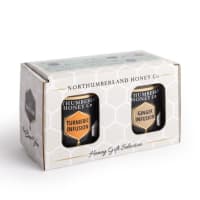
Infused with turmeric and ginger, this honey offers unique flavors and health benefits, setting it apart from standard honey gifts. Two 340g jars of premium infused honey with turmeric and ginger flavors, presented as a gift set.
Not ideal if Allergies to honey or spices may be a concern; not suitable for vegans or those avoiding sugar.
View at Real Food Hub · £19.50
Picked and ranked for fit to a neighbour for a housewarming. Written by Eudora, reviewed by Euphora's founder before publication. Full method: how we choose and rank.
Prices from the shops' feeds, 19 October 2026.
UK
Housewarming gifts in Britain run on a set of quiet defaults that most people follow without thinking about them. A bottle of wine, a box of chocolates, a potted plant. The gesture is deliberately low-key: anything too generous feels like it's trying too hard, and the British discomfort with obligation means your neighbours will feel awkward if the gift is expensive.
The traditional first-visit gift sits around £10–20. Flowers are common, but white lilies carry a strong funeral association across the UK, so skip those. The "oh you shouldn't have" ritual is mandatory. Both parties know the script, and it greases the social mechanics of a first meeting.
Scotland has a specific tradition worth knowing: first footing. The first person to cross the threshold after midnight on Hogmanay (New Year's Eve) traditionally brings coal, shortbread, a silver coin, and whisky. If your neighbours moved in around the new year in Scotland, a nod to this custom (a coin tucked into whatever you bring) lands well.
The British knife superstition ("cuts the friendship") is fading but hasn't vanished. The workaround is the recipient giving the giver a coin in return, but for a first meeting with someone you don't know well, a bladed gift is easy to skip.
For cross-cultural encounters specifically, the safest British move is baked goods you've made yourself, or a good box of biscuits. It signals effort without formality, it sidesteps most dietary issues (you can ask "do you have any dietary requirements?" without it being awkward in British culture), and it creates a natural opening for a short doorstep conversation rather than an extended visit neither party is ready for.
Ireland
Ireland runs on a principle that quietly shapes every gift exchange: don't have notions. That's the social penalty for showing off, and it applies doubly to neighbour gifts. An expensive housewarming present doesn't read as generous in Ireland. It reads as odd. A batch of scones, a jar of local jam, or a simple plant says "welcome" without triggering any social alarm.
The Irish are direct about food gifting in ways that actually help with cross-cultural situations. Bringing food to someone's home (especially during transitions like moving) is deeply embedded in Irish culture. Casseroles, sandwiches, and baked goods are standard gestures for everything from bereavement to a new baby. A food gift for new neighbours fits this pattern perfectly.
In Ireland, white lilies are a classic funeral flower, though Irish florists also sell them for weddings, birthdays and a new baby. For a welcome, you may prefer a bouquet with colour. If your new neighbours are Irish-born and you're the one from a different culture, that is worth knowing.
One subtlety: if your neighbours have come from abroad, mentioning that you bought something from a local Irish maker adds social value in Ireland. "Supporting local" carries genuine weight. A locally produced food item or handmade candle communicates both welcome and that you've put thought into the area you share.
The budget norm for a neighbour housewarming in Ireland sits at €10–25. Going above €30 starts to feel loaded, and the notions radar activates. Keep it modest, keep it warm, and don't worry about it being small. In Ireland, the fact you knocked on the door matters infinitely more than what was in your hand when you did.
Germany
German housewarming customs are more structured than their British or Irish equivalents. The word to know is Einweihungsfeier (housewarming party), though many Germans also use the more casual Einzugsparty. When invited to one, you bring something. When you're the one welcoming new neighbours, you typically visit within the first week or two with a small gift.
The traditional German housewarming gift is bread and salt: Brot und Salz. Bread so the household never goes hungry, salt so life always has flavour. This tradition is old, widely known, and still practised, especially in smaller towns and among older Germans. A good loaf of bread with a small jar of quality salt is a perfectly respectable gesture and avoids every cultural landmine. It also translates well across cultures because the symbolism (wishing plenty and flavour) is nearly universal.
If you're bringing flowers to German neighbours, a bright mixed bouquet is a safe choice. German etiquette guides say to take the paper off before you hand them over.
Gifts in Germany should be opened immediately in front of the giver. Setting a gift aside to open later reads as rude. This is worth knowing because some cultures do the opposite. In parts of East and South Asia, opening a gift in front of the giver can feel uncomfortable. If your new neighbours come from a culture where gifts are set aside, don't read it as a slight.
Anything too expensive creates Verpflichtung (a sense of obligation to reciprocate), which Germans find genuinely uncomfortable. So keep the gift modest. A useful kitchen item or a quality food product outperforms a decorative object.
Netherlands
The Netherlands operates on a principle called zuinigheid: frugality as a positive cultural value. "Doe maar normaal, dan doe je al gek genoeg" (just act normal, that's crazy enough) is the national motto in all but name, and it applies to gift-giving with full force. An extravagant housewarming gift doesn't impress Dutch neighbours. It makes them uneasy.
Dutch directness is your friend in cross-cultural neighbour situations. If you're unsure whether a food gift is appropriate (say, because you don't know your new neighbours' dietary restrictions), you can simply ask. In many cultures this feels intrusive. In the Netherlands, directness is a form of respect. "I'd like to bring you something to welcome you — are there any foods you don't eat?" is a perfectly normal Dutch question that won't raise eyebrows.
The standard housewarming budget in the Netherlands is €10–20. A potted plant, a box of good stroopwafels, or a bag of quality coffee are all typical. Anything with visible luxury branding will be received poorly. Conspicuous consumption is a genuine social misstep in Dutch culture, more so than in most of its neighbours.
Like Germany, gifts are opened immediately in front of the giver. And Dutch honesty extends to gift reactions: "I don't need this" or "this isn't my taste" are legitimate responses that mean exactly what they say, not a rejection of you. If your new Dutch neighbours say something direct about a gift, don't take it personally. They're being respectful in the Dutch sense.
One thing that matters here: the Netherlands is one of the most culturally diverse countries in Europe. Dutch-Muslim communities (Moroccan, Turkish, Indonesian, Surinamese heritage) make up a significant portion of the population. Indo-Surinamese communities observe Diwali. Many multicultural families participate in Dutch cultural traditions like Sinterklaas alongside their own. Your new neighbours in Rotterdam or Amsterdam may have deep Dutch roots even if their cultural background looks unfamiliar to you. Don't assume someone who "looks different" is new to the country.
France
France adds a layer that most other European cultures don't: presentation is judged almost as seriously as the gift itself. Beautiful wrapping, precise folds, a handwritten card. French shops commonly offer free gift wrapping (ask for "un paquet cadeau"), and using it signals that you understand the social code. Showing up with an unwrapped gift feels unfinished.
The single most important rule for housewarming in France: don't bring wine unless it's genuinely exceptional. This is different from the UK, where a bottle of wine is the default safe choice. In France, bringing wine to someone's home implies their own cellar is inadequate. Chocolates, a good dessert, or champagne are the standard alternatives. If you do bring wine, it should be something specific and chosen with thought, not a supermarket bottle grabbed on the way over.
Flower taboos in France are strict and seriously observed. Chrysanthemums are the flowers of Toussaint (All Saints' Day, November 1). They go on graves, and giving them to a living person is an unforgiving social error. Yellow flowers signal infidelity. Red roses are romantic only. Carnations carry bad luck. Even numbers of stems are for funerals (and never thirteen). For a neighbour housewarming, a bright mixed bouquet in an odd number of stems, avoiding all the above, is safe and welcome.
French gift culture values quiet quality over visible branding. A small, well-chosen item beautifully presented will always outperform an expensive item with a prominent logo. This actually works in your favour for cross-cultural situations: a simple food gift (quality honey, a regional speciality, artisanal preserves), wrapped well, with a short handwritten note, fits perfectly.
The budget norm for a neighbour gift in France is €15–30. The étrennes tradition (tipping service workers between November and January) means the French are accustomed to calibrated generosity: the right amount for the right relationship. A neighbour gift that's too cheap looks careless; too expensive looks like you're trying to buy the relationship. Aim for "small and considered."
One practical detail: if your new neighbours have moved from abroad, a small note introducing yourself with your name and flat/house number is a genuinely French gesture. It's practical, low-pressure, and gives them a way to reciprocate contact without the social weight of a face-to-face visit before they're ready.
Spain
Spain operates on warmth and generosity as social values: ser generoso is a genuine compliment. But Spanish generosity is about spirit, not price tags. A cheap gift doesn't offend because it's cheap; it offends if it's visibly generic or thoughtless. Effort and personality matter here.
Housewarming in Spain is often more social than transactional. Your neighbours might invite you in for coffee rather than expecting a doorstep exchange. If they do, accept. The gift in this context is secondary to the relationship-building. Refusing a cup of coffee feels like a rejection of the overture itself.
Flower taboos matter here too. Purple and white flowers carry mourning associations. Dahlias are considered poor taste. Thirteen of anything is bad luck. A bright, warm-coloured bouquet (yellows, oranges, reds) in a non-thirteen odd number is safe.
Spanish culture draws a line between gifts and household supplies. A purely practical item with no emotional dimension (cleaning products, basic kitchen tools) doesn't register as a gift. It registers as an errand. Something consumable that feels like a small luxury works much better: quality olive oil, a selection of regional sweets, good coffee, or pastries from a local bakery.
The budget for a neighbour housewarming in Spain is around €10–25. Going higher is fine if the gesture feels natural (bringing a home-cooked dish, for instance, has no price ceiling because the value is in the labour). But a wrapped gift above €30 for a first-time neighbour meeting starts to feel formal in a way that doesn't match the Spanish social register.
Regional variation matters. Catalonia, the Basque Country, and Galicia have distinct cultural identities, and a gift that nods to local traditions (regional food specialities, for instance) signals awareness and respect. If your new neighbours are from one of these regions, a locally sourced food product from your shared area creates an easy connection point.
Spain's growing international population means many neighbourhoods include families from Latin America, North Africa, and Eastern Europe. The Spanish approach to cross-cultural encounters tends to be direct and warm, less anxious than the British approach, more personally engaged than the Dutch. Your neighbours are likely to appreciate any gesture and respond with openness, even if the specific gift isn't perfect.
The cross-cultural housewarming
Across all six countries, the housewarming gift follows a consistent logic: it should be consumable or living (food, drink, plants), modest in price, and presented with warmth rather than formality. The biggest cultural variable is alcohol. In the UK and Ireland, a bottle of wine is a safe default for most situations; in France, wine implies criticism of the host's taste. In Germany and the Netherlands, wine is fine but secondary to the bread-and-salt tradition or a simple food gift; in Spain, wine works but feels less personal than food. And for neighbours whose religion or personal choice excludes alcohol (which you may not know on a first meeting), a non-alcoholic gift removes the risk entirely. The universal safe zone: a quality food item, a potted herb or plant, or baked goods you've made yourself.
The real taboos are fewer than you fear, but they're absolute. Alcohol is the most common cross-cultural risk. Many Muslim, Hindu, Buddhist, and some Christian denominations don't drink, and presenting a bottle to someone who abstains creates an awkward moment for both of you on a first meeting. If you don't know, don't guess. A food gift or plant sidesteps the question entirely. Leather is inappropriate for practising Hindu neighbours (cows are sacred) and some Buddhist households. Gelatin-based sweets are off-limits for observant Muslims and many Hindus. Pork products (including some cheeses with animal rennet) are prohibited in Islam and Judaism. None of this requires memorising a matrix of restrictions. It requires one simple habit: when in doubt, choose something plant-based or baked, and you'll avoid every dietary and religious restriction on this list simultaneously.
Flower taboos vary sharply by country but share a common thread: the flowers that are wrong are wrong because they're associated with death. Chrysanthemums are cemetery flowers in France and Belgium. In the UK, white lilies are funeral flowers. Carnations can read either way: in the US they are a sympathy flower and also the original Mother's Day flower. Yellow flowers imply infidelity in France. Red roses read as romantic, so they're best kept for a partner. The safe path: a bright, mixed-colour bouquet, avoiding single-variety bunches of any flower on the taboo list and, in the UK, all-white arrangements. If you'd rather skip flowers altogether, a potted herb (rosemary, basil, mint) avoids the taboo list entirely, and the recipient can actually use it.
Gifts that comment on someone's home (however indirectly) are risky for a first meeting with any neighbour, and doubly so across cultures. A scented candle can imply you think their home smells. Air fresheners are worse. Cleaning products are an insult wrapped in cellophane. Home decor items assume your aesthetic taste matches theirs. Even something as seemingly neutral as a picture frame carries assumptions about what they want on their walls. These gifts work between close friends who know each other's taste. Between new neighbours who've barely spoken, they read as judgment. Stick with things that get consumed or that grow: items that don't linger in someone's space making silent claims about their lifestyle.
Gift-giving research consistently shows a gap between what givers and recipients value. Givers focus on the moment of exchange, the surprise and the wow; recipients value how useful the gift is over time. For a neighbour housewarming, this matters: you might be drawn to something impressive-looking, but your neighbours will appreciate something they can eat this week or a plant they can keep on the windowsill. The consumable gift isn't boring: it's what the research says actually works.
If you're genuinely unsure about dietary or religious restrictions, bake something yourself and include a handwritten note listing the ingredients. This solves three problems at once: it shows personal effort (universally valued), it lets the recipient check for anything they can't eat without an awkward conversation, and it gives you a reason to knock on the door. Home-baked goods also sidestep the "how much did this cost" calibration entirely, because the value is in the labour, not the price.
In many East and South Asian cultures, gifts are not opened in front of the giver. It's considered impolite to react immediately, because the recipient might feel pressured to perform gratitude. In Germany, the Netherlands, France, Spain and Ireland, the opposite is usual: gifts tend to be opened when received. If your new neighbours set your gift aside rather than opening it at the door, it almost certainly means they come from a culture where this is the respectful response. Don't read it as indifference.
Don't let cultural anxiety become an excuse for inaction. The biggest mistake people make with cross-cultural housewarming isn't bringing the wrong gift — it's never knocking at all. A neighbour who receives an imperfect gift remembers the warmth. A neighbour who gets no welcome at all remembers the silence. If you've been overthinking this for two weeks, stop researching and go knock on the door. A packet of good biscuits and a genuine smile will do more than any perfectly calibrated cultural gesture.
Treats they wouldn't add to their own basket
Small luxuries that feel like a reward — the kind of thing they'd enjoy but would talk themselves out of buying.

Cadbury Roses Chocolate Assortment — 275g Gift Box
£5.50from Cadbury Gifts DirectShips internationallyCadbury Roses is a beloved, iconic brand with a variety of flavours in one box, making it a reliable and universally appealing choice.
Not ideal if Contains dairy and may not suit those with dietary restrictions.
Tell us about your new neighbours (their interests, your budget, any dietary considerations) and we'll suggest housewarming gifts that fit.
AI reads what you write; our code then picks the gifts. How it works
Where to shop
Click any shop to preview what they offer.
Plants are culturally universal — a safe, welcoming gesture
Ships across Europe
Browse Be.Green Plant DesignClean Scandinavian design transcends cultural styles — a porcelain cup with their initial
Ships worldwide
Browse Design LettersChocolate is broadly safe — check dietary needs first
Ships across Europe, plus Australia, Canada and New Zealand
Browse Cadbury Gifts DirectHandmade natural homeware from artisans worldwide — a warm, culturally neutral welcome
UK
Browse nkukuQuestions people ask
What if I don't know my new neighbours' religion or dietary restrictions?
You don't need to know. The safest category is plant-based food: fresh fruit, baked goods made with vegetable fat, quality preserves, or a selection of dried fruits and nuts. These avoid every common dietary restriction (halal, kosher, Hindu vegetarianism, veganism) without requiring you to ask questions that might feel intrusive on a first meeting. If you bake something yourself, writing the ingredients on a card lets the recipient make their own assessment.
Is it better to bring something or to invite them over?
Bring something first. An invitation to your home on a first interaction puts social pressure on people who are still settling in, unpacking boxes, and possibly adjusting to a new country. A doorstep gift with a brief, friendly introduction ("I'm [name], I live at number [X], welcome to the street") is lower pressure and lets them decide how much interaction they want. The invitation can come later, once you've established a baseline of friendly recognition.
Should I bring something for their children too?
If you can see they have children (toys visible, school uniforms on the line, you've seen them in the garden), a small addition for the kids is a warm touch. A colouring book, a packet of coloured pencils, or a small bag of sweets shows you've noticed their family. Avoid anything with text in a language their children might not read, and avoid anything that could be a choking hazard for very young children. Keep it simple. The kids' gift is a signal to the parents that you see their whole family, not just them.
How do I handle the language barrier if my neighbours don't speak much English (or the local language)?
A handwritten note is your best tool. Write a short welcome message (even two or three lines) with your name and house number. Translation apps can help you add a line in their language if you know what it is, and even an imperfect attempt signals respect. If conversation at the door is halting, smile, point to the gift, gesture to your own front door, and let body language do the rest. The fact that you tried matters more than fluency.
What if they try to refuse the gift?
In some cultures, ritual refusal is standard etiquette: the recipient declines once or twice before accepting, and the giver gently insists. This is common in Chinese, Japanese, Iranian, and many Middle Eastern cultures. If your neighbours wave it away initially, offer it once more with a smile. If they decline a second time with visible discomfort (not ritual politeness), respect it. Some people feel genuine anxiety about incurring an obligation they can't reciprocate, especially if they've just spent everything on a move.
Is a card on its own enough?
Honestly, yes. A handwritten card with your name, house number, and a line of genuine welcome is a complete gesture. It doesn't require any cultural calibration, it doesn't risk dietary or religious missteps, and it costs almost nothing. If you're paralysed by uncertainty about what gift to bring, a card removes every obstacle. You can always follow up with a food gift once you've met them and have a better sense of what they'd appreciate.
You're standing in your kitchen, holding a packet of biscuits and a handwritten note, trying to decide if this is enough. It is. Your new neighbours just moved, possibly across the country, possibly across the continent. Their boxes aren't unpacked. Their kids might be starting a new school where they don't know anyone. The street outside looks different from the one they left.
And then someone knocks. Someone from next door, holding something small, saying welcome.
That knock is the gift. Everything in your hand is just a reason to make it.
Euphora helps you find the right gift — with tailored recommendations, gift guides, and specialist retailers we've vetted ourselves.