Should You Get Your Therapist a Gift? A Decision Guide
You want to thank someone who's seen you at your most unguarded, and you're not sure a gift is even allowed in a relationship built entirely around not owing each other anything. That uncertainty makes sense. This isn't a relationship with a script: no birthday tradition, no office gift rota, nothing to copy from. What follows isn't a product list. It's a decision framework: when timing changes what's appropriate, what value line matters more than what you buy, and when a card alone is the stronger move.
Top picks for UK delivery
Euphora earns a commission when you buy through these links, at no extra cost to you. How we're paid
- Dark Emerald Recycled Glass Tealight Holders SetShips to UK

The hand-blown recycled glass and hammered texture set these tealight holders apart from mass-produced alternatives. The dark emerald hue adds a touch of elegance and warmth, making them a standout piece for any home.
Not ideal if Glass is fragile; may not suit households with young children or pets.
View at nkuku · £25 - Handcrafted Mango Wood Side Plates SetShips to UK

These plates stand out due to their handmade craftsmanship and use of mango wood, offering a unique rustic charm that mass-produced tableware lacks. The aspect appeals to recipients.
Not ideal if Wooden tableware may require occasional oiling to maintain its appearance and may not be suitable for dishwashers, which could be a consideration for some recipients.
View at nkuku · £20 - Schopenhauer's Aphorisms on the Wisdom of LifeShips across Europe

Unlike generic self-help books, this work offers profound philosophical depth and literary elegance, making it a standout gift for those who appreciate intellectual rigor and timeless wisdom.
Not ideal if May not appeal to those who prefer light or practical reading.
View at PersonalNOVEL · €26.95
Picked and ranked for fit to a professional contact as a thank-you. Written by Eudora, reviewed by Euphora's founder before publication. Full method: how we choose and rank.
Prices from the shops' feeds, 19 October 2026.
Am I even allowed to do this?
The question underneath 'what should I buy' is really 'is this okay at all,' and that's a fair thing to ask about a relationship defined by boundaries the other person holds for you, not the other way around. Nothing about a modest, low-key thank-you crosses a professional line by default. Many therapists mention gift policy briefly in intake paperwork or in passing conversation, and most who don't have a stated policy still accept small gestures without turning them into material for the next session. Worth naming honestly: some practices do have explicit no-gift rules, usually tied to insurance or an ethics board, and that has nothing to do with how they feel about you personally. If your therapist has said or written anything on this, that settles it.
Default to yes, with a low ceiling. A small, modest, easily-declinable gesture is fine in the overwhelming majority of cases. If you've never heard your therapist mention a policy either way, assume the modest default holds and move on to deciding what 'modest' means for your specific situation.
One honest gap: professional codes of ethics for therapists vary by governing body and by country, and some restrict gift acceptance more than the cultural norms in this guide can account for. What's culturally normal where you live isn't the same as what your specific therapist's professional obligations allow. When in doubt, the smallest gesture is also the one least likely to put them in an awkward professional position.
You don't know if this is a goodbye or a check-in
Ending therapy and continuing therapy aren't the same decision, even though they feel like the same dilemma. A gift given mid-treatment, while the clinical relationship is still active, is more likely to become something to gently address in the room, a small boundary worth naming. A gift given at the actual end, when the frame is closing rather than continuing, reads simply as a goodbye. There's no session next week to make it awkward in.
If you're ending treatment, or this is genuinely your last session before a long break, a slightly warmer gesture (still modest) lands more easily than the same gesture would mid-treatment. If you're continuing into the new year, keep things smaller and let a card do most of the work. Save anything more considered for the actual goodbye.
You have no idea what they'd actually like
You've spent months, maybe years, being emotionally close to this person without knowing basic facts about their life: whether they drink wine, what they read, whether they even like chocolate. That's not a gap in your attention. It's the design of the relationship. Don't try to close it with a personal gift. Skip anything that assumes intimacy you don't actually have: skincare, perfume, jewellery, anything you'd give a friend who'd shown you their bathroom cabinet. The relationship feels close because of what's been said in the room, not because you know this person the way a friend does.
The safer category is small, consumable, and gone within a week: a box of good chocolates, a jar of something for the kitchen, a modest bottle of wine if you're confident they drink. None of these ask your therapist to display, wear, or reference your gift again. They also sidestep two pitfalls. Ask about the practice's gift policy before giving cash or vouchers, and skip flowers, since some, such as white lilies in the UK, carry funeral meanings. A gift involving a knife or scissors is also worth avoiding on general etiquette grounds, quite apart from the symbolism nobody wants to examine too closely here.
Choose something consumable, modest, and unopinionated about the therapist's specific tastes. If you're not confident they drink alcohol or cook at home, stick to something more universal, like a small box of sweets, rather than anything that presumes a habit you haven't actually confirmed.
The instinct to spend more because the relationship meant more is worth resisting here specifically. In most relationships, a bigger gesture signals more gratitude. In this one, it signals discomfort, both because of what it might cost the therapist professionally to accept it and because a large or expensive object needs somewhere to be discussed, which is exactly what you're trying to avoid.
The number that matters more than the object
Somewhere under roughly £20 sits the safest zone across the UK, Ireland, Germany, and the Netherlands, broadly matching the low end of teacher-gift and workplace-courtesy norms in each. Between £20 and £30, you're still fine, but you're spending in a range best reserved for a genuine ending, not a mid-year thank-you. Past £50, you're in territory that starts to look less like gratitude and more like an attempt to influence the relationship, which is exactly the read you're trying to avoid. In the Netherlands, even the low end can feel like an imposition; Dutch professional culture treats client-to-provider gifts as something to approach carefully, and a card alone often lands better there than any object would.
Stay under £20-£25 for a routine end-of-year thank-you. Reserve the £25-£30 range for a genuine goodbye, and treat anything above £50 as a hard stop, regardless of how meaningful the relationship has been to you.
There's no direct research on therapist-specific gift norms in any of the four markets this guide covers. The £20-£30 comfortable zone above is built from the closest available analogues: teacher-gift norms and staff gift-disclosure thresholds in the UK, general workplace modesty norms in Ireland and Germany, and documented caution around professional gift-giving in the Netherlands. Treat it as a careful estimate, not a rule handed down by any professional body.
They've already told you the answer
Some therapists solve this for you without meaning to. Intake paperwork occasionally states a gift policy outright. Others mention it once, in passing, usually framed gently: 'you don't need to bring anything,' or a specific comment about not accepting anything of value. If you've heard anything like that, take it at face value rather than assuming it's politeness you're meant to push past. The absence of a stated policy doesn't tell you anything either way. It just means you're back to the general defaults above.
Treat any stated policy, spoken or written, as final. When there's no stated policy, follow the modest default rather than guessing at an unstated preference.
If none of this feels right, the card is the gift
A handwritten note, specific about what actually helped, isn't a consolation prize for skipping the object. In several of the markets this guide covers, it's the stronger choice on its own. Even where an object is welcome, the note is doing the real emotional work every time. The object, when there is one, is just confirmation.
If you write one thing, make it specific. Not 'thank you for everything,' but the particular shift you noticed: the session that mattered, the thing you can now do that you couldn't before. Specificity is what makes a card feel considered rather than obligatory, and it costs nothing beyond the time it takes to mean it.
When you're genuinely unsure whether a physical gift crosses a line, default to the card. It's never the lesser option in this particular relationship.
In the Netherlands, professional gift-giving carries a discomfort that doesn't show up the same way in the UK, Ireland, or Germany. Dutch workplace culture can treat an unprompted gift from client to provider as a potential imposition rather than warmth. If you're seeing a therapist there, a short card may genuinely be the better choice, not the fallback one.
Quick decision rules
Gifts that say 'I noticed'
Chosen because you spotted something specific about who they are — not generic, not safe, just right.

Unlike typical memoirs, this book combines powerful photography with personal narrative, offering a visceral and emotional experience. Lynsey Addario’s firsthand account of war and resilience sets it apart.
Not ideal if Themes of war and suffering may be too intense for some readers.
Treats they wouldn't add to their own basket
Small luxuries that feel like a reward — the kind of thing they'd enjoy but would talk themselves out of buying.
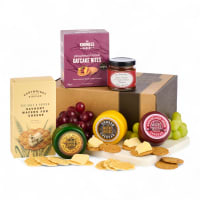
The combination of three distinct cheddars with complementary crackers and chutney elevates this hamper beyond a standard cheese platter, offering a curated tasting experience.
Not ideal if Requires refrigeration, so not ideal for long-distance shipping or recipients without fridge space.

Green & Black's Classic Miniatures Chocolate Collection
£7.25from Cadbury Gifts DirectShips internationallyStands out for its Fairtrade and organic credentials, offering a guilt-free indulgence. Total weight 180g.
Not ideal if May not suit those with dietary restrictions (e.g., nut allergies).
Decided a small gift makes sense? Our finder can match something modest and appropriate to your budget in under a minute.
AI reads what you write; our code then picks the gifts. How it works
Where to shop
Click any shop to preview what they offer.
A single jar from the everyday range stays consumable and modest, the kind of small thank-you a professional boundary can comfortably hold.
Ships worldwide
Browse TruffleHunterChocolate is about as symbolic and consumable as a thank-you gift gets, safely inside the boundary this relationship calls for.
Ships across Europe, plus Australia, Canada and New Zealand
Browse Cadbury Gifts DirectQuestions people ask
Is it okay to give my therapist a gift?
Generally yes, provided it's modest and doesn't ask for a reaction. Most professional bodies don't prohibit small gifts outright, they simply ask therapists to consider what accepting one means clinically. Managing that is their job, not yours. Your part is keeping the object itself unremarkable.
Do therapists accept gifts from clients?
Most do, especially near the end of treatment or around a year-end break. What varies is how they handle it in the room: some say thank you and move on, others might gently reflect on what prompted it. Neither response means you did something wrong.
What is an appropriate gift for a therapist?
Something consumable and low-commitment works best: a small potted plant, a bag of good coffee, or a candle without a heavy scent are all safer than anything personal-care related. Avoid items that require ongoing display or that were priced to be noticed.
How much should I spend on a gift for my therapist?
There's no floor here, only a ceiling. A £5 bag of good biscuits says just as much as a £25 bottle of wine, because the object was never the point. The ceiling worth remembering is roughly £20-£25 for a routine thank-you, stretching toward £30 only for a genuine goodbye.
What should I write in a card for my therapist?
Keep it short and specific. Name one thing that actually changed rather than praising the relationship in the abstract: 'I can have hard conversations with my mum now' carries more weight than 'thank you for everything,' and it's easier for your therapist to receive without needing to say much back.
Is it weird to give my therapist a gift at the end of the year?
No weirder than tipping a hairdresser or thanking a teacher, both relationships with the same built-in asymmetry. The end of the year gives the gesture a natural, low-pressure reason to exist without needing to mean anything more than a seasonal thank-you.
You came here unsure if gratitude was even allowed in a relationship with this many boundaries. It is, in the modest, unremarkable form this guide has walked through: something small enough to disappear within a week, or nothing more than a card that says exactly what changed. Either way, the gesture is meant to land quietly and let the next session, or the last one, carry on exactly as it always has.
Euphora helps you find the right gift — with tailored recommendations, gift guides, and specialist retailers we've vetted ourselves.