Christmas Gifts for Stepchildren, Without the Guesswork
You've probably already done the maths this year: whose stocking is heavier, whose gift cost more, whether the wrapping paper matches. That silent audit doesn't make you paranoid, it makes you a step-parent in a blended family, where every choice under the tree gets read by an audience you can't always see. This guide argues something that might feel counterintuitive: the fairness you're chasing has almost nothing to do with sameness, and the comparison you're bracing for probably isn't happening at your own table.
Top picks for UK delivery
Euphora earns a commission when you buy through these links, at no extra cost to you. How we're paid
- Gold-Plated Square Link Charm BraceletShips internationally

The square link design and recycled materials set this bracelet apart from mass-produced alternatives, offering a unique blend of elegance. Adjustable 19 cm gold-plated sterling silver bracelet with square links, designed for layering with charms.
Not ideal if Gold plating may wear over time; sizing is adjustable but may not fit all wrist sizes well.
View at Design Letters · €55 - Sterling Silver Key Pendant Necklace with ZirconiaShips internationally

The key-shaped pendant stands out for its symbolic meaning and elegant design, combining sterling silver with zirconia for a touch of sparkle. The choice of finishes adds versatility.
Not ideal if Jewellery preferences vary; ensure the recipient enjoys delicate, symbolic pieces.
View at Hey Happiness · €34.90 - Classic Christmas Fairy Tales CollectionShips across Europe
Unlike generic holiday books, this collection spans global traditions, offering a rich tapestry of stories from different cultures and time periods. Its hardcover presentation and timeless content make it a keepsake.
Not ideal if May not appeal to recipients who prefer modern or non-fiction literature.
View at PersonalNOVEL · €26.95
Picked and ranked for fit to a stepchild at Christmas. Written by Eudora, reviewed by Euphora's founder before publication. Full method: how we choose and rank.
Prices from the shops' feeds, 19 October 2026.
There's a version of Christmas morning where nothing goes wrong: no exchanged glances between the children, no comment about who got more, no silent scoreboard being kept behind anyone's eyes. Getting there takes work most first-time step-parents underestimate, because gift-giving in a blended household carries weight that has nothing to do with the price on the box. Every gift you hand a step-child is being read at once by that child, any biological children under the same roof, your partner, and often a co-parent and grandparents you'll never see open a single present. You didn't sign up to be judged on a wrapping job, but here you are.
The fear underneath this isn't really about getting the item wrong. It's the worry that one badly judged gift will confirm something the child already half suspects, that they're loved a little less, or a little differently, than the children who share your last name or your DNA. That fear is common enough to have a name in step-parenting circles, even if nobody's written the etiquette book yet. This isn't overreacting. It's an accurate response to a situation with genuinely higher stakes than it looks from outside.
Equal Isn't the Same as Fair, and Your Step-Child Already Knows the Difference
The instinct to buy an identical item for your step-child and any biological children in the house comes from a good place: you want to be seen as scrupulously fair, and matching feels like the only provable form of fairness. It backfires anyway. A same-price, same-brand gift for every child in the room doesn't read as love, it reads as accounting, and children are unusually good at spotting the difference between a gift chosen for them and a gift chosen to balance a ledger.
What actually works is matching the scale of your spending across children in your household, then letting the specific gift differ according to who each child actually is. A £35 item for one child and a £35 item for another removes the ammunition for comparison entirely, even if one is a beauty set and the other is a craft kit. Sameness in scale, difference in substance, works because it treats each child as a specific person rather than a line item.
This isn't just a hunch. In Ireland, the Netherlands and Germany, culture already leans this direction: overtly matched, expensive, look-at-me gifts create discomfort rather than goodwill in households that value restraint over display. If you're worried about getting the amount right, moderate and individual beats generous and identical almost everywhere your family might be spending Christmas this year.
Resist the urge to ask your step-child directly what they want, more than once. Repeated direct questions can feel like an audition to a child who's already hyperaware of being evaluated. Better: ask their other parent what they've been into lately, notice what they reach for on their phone or bookshelf, or ask a low-stakes, sideways question about what their friends are into right now, one that doesn't put them on the spot.
The Gift Rules Change Between Year One and Year Five
A first Christmas together and a fifth Christmas together call for different registers, and treating them the same is where a lot of well-meaning step-parents go wrong. In year one, a gift that declares the relationship, engraved family names, matching ornaments, anything with 'bonus mum' or 'bonus dad' printed on it, tends to land as presumptuous rather than warm, because it claims a closeness that hasn't been built yet. The safer register early on is interest-first: something rooted in what the child is actually into, given without ceremony, exactly as you'd give a gift to any child in the house.
By year five, the calculus flips. A gift that's still carefully neutral after half a decade can read as distance rather than respect, as though you're still keeping your hands off. This is where personal touches, an initial, a piece that reflects taste you've come to know over years of actually paying attention, start to feel earned rather than forced. The relationship has a timeline. Let the gift follow it instead of freezing at 'careful and appropriate' forever.
If you're not sure which year you're in, ask whether the child would be surprised you knew this specific detail about them. A surprised reaction means you're still building trust, so keep it understated. A knowing nod means you've clearly been paying attention for years, and a little more warmth is overdue, not overstepping.
Christmas doesn't mean the same shopping deadline everywhere your family might celebrate it. Germany opens gifts on the evening of December 24th, immediately in front of whoever gave them, so being present at that exact moment matters as much as the gift itself. In the Netherlands, many families also give gifts at Sinterklaas on 5 December. Ask a Dutch family which evening they keep before you plan around the 25th. If your family spans these calendars, work backward from the earliest date, not the last one.
The Comparison That Actually Matters Isn't Happening At Your Table
Here's a redirect worth sitting with: the comparison you're bracing for probably isn't happening at your own table. Your step-child comparing their pile to a sibling's pile in front of you is a live, visible, manageable moment, one you can plan for. The comparison that's harder to shake is the one that happens later, quietly, when they're back at their other house and mentioning what you got them, or vice versa, without you in the room to explain the reasoning behind it.
You cannot see that comparison and you cannot win it. There's no version of a gift that beats a co-parent's gift on some universal scale, because the child isn't scoring the item, they're processing two entirely different households and trying to make sense of both. Trying to out-spend or out-guess an invisible benchmark just pulls you into a competition nobody declared and nobody can referee.
What you can control is whether your gift is specific to this child, whether it was given without a scoreboard, and whether it fits comfortably into the budget you'd give any child in your home. If the other house went bigger this year, that's information about the other house, not a verdict on your relationship with this child.
If Sinterklaas is part of your family's tradition, know that it has customs of its own that a new step-parent may not know yet. Some Sinterklaas gifts come with a handmade 'surprise' disguise and a short, personalised poem about the recipient's year. Both draw on a familiarity you might not have yet. If you're a Christmas or two into the relationship, lean on your partner or the child's other parent for the specific details rather than skipping the tradition altogether. A slightly help-assisted poem beats no poem at all.
Still not sure what fits your specific situation, how new the relationship is, what they're into, what the budget should really be? Tell us about your step-child and we'll narrow it down without the guesswork.
AI reads what you write; our code then picks the gifts. How it works
Managing the Moment When Both Kids Unwrap at Once
Live comparison is different from reported comparison, and it needs a different fix. When a step-child and a biological child open gifts side by side, in the same five minutes, on the same sofa, any visible gap in size, price, or excitement gets processed instantly, before anyone's had time to add context. This is the scenario most step-parents actually picture when they say they're anxious about Christmas morning, and it's also the most manageable one, because you're in the room and can shape it.
Keep the physical presentation roughly matched: similar-sized boxes, similar wrapping effort, gifts opened in a similar order rather than saving one child's 'best' item for a dramatic finale. None of that requires the contents to match. A quieter, smaller-looking box can hold something the child will actually use for years, while a bigger box holds something that gets forgotten by February. Size and price are what get compared in the room, long-term use is what gets compared later, and it's the one you actually have more control over.
If you can, open gifts in a loose rotation rather than everyone tearing in at once. It slows the moment down, gives each child a beat of individual attention, and quietly removes the side-by-side comparison that makes any size difference feel more significant than it is.
What Grandparents Get Wrong, and How You Quietly Fix It
Grandparents and wider family often create the exact imbalance you've been working to avoid, and it isn't usually deliberate. A grandparent who's known the biological children for a decade and the step-child for two years will, understandably, buy with different depth of knowledge, and the resulting pile under the tree can look lopsided in a way that has nothing to do with how anyone actually feels about the step-child.
You didn't cause this, but you're often the one positioned to soften it. A brief word to grandparents ahead of time, mentioning a specific interest of your step-child's, gives them something concrete to work with instead of a generic gift bought out of obligation. It's a small intervention, not a correction of anyone's feelings, and it tends to work better than any gift you personally could give to balance the scales after the fact.
If the imbalance still shows up on the day despite your best efforts, resist the instinct to immediately compensate with an extra gift of your own. That reads as damage control, and children notice damage control faster than they notice the original imbalance. A calm, unremarkable reaction from you does more to neutralise the moment than a rushed top-up gift ever will.
Gifts that say 'I noticed'
Chosen because you spotted something specific about who they are — not generic, not safe, just right.
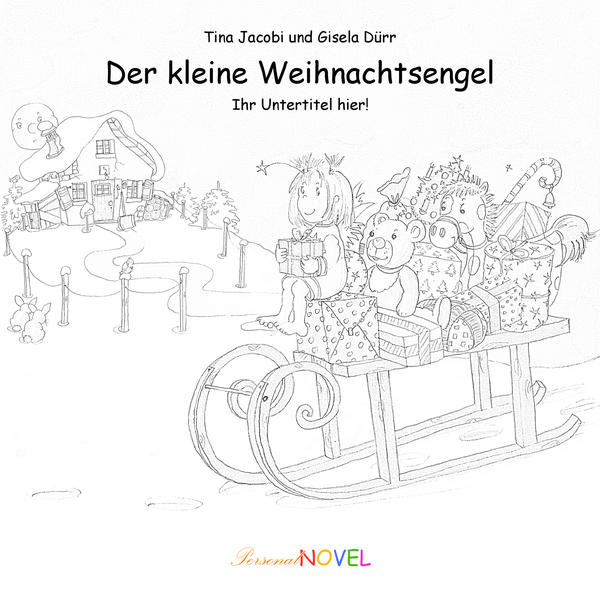
Unlike generic Christmas books, this story focuses on the theme of helping others, making it both festive and emotionally resonant. The illustrations and narrative are designed to captivate young readers and spark conversations about kindness.
Not ideal if Limited appeal outside of Christmas or for children who do not celebrate the holiday.
Treats they wouldn't add to their own basket
Small luxuries that feel like a reward — the kind of thing they'd enjoy but would talk themselves out of buying.
The unicorn theme and variety of sweets set this apart from standard chocolate boxes. The presentation in a themed box adds to the magical experience.
Not ideal if Contains sugar, which may not suit all dietary preferences.

The Harry Potter collage design and beginner-friendly paint-by-numbers format make this kit stand out from generic craft sets, offering a themed, rewarding project. A 30×50cm pre-mounted linen canvas paint-by-numbers kit featuring a Harry Potter portrait collage set against Hogwarts imagery.
Not ideal if Design is niche (Harry Potter fans only) and may not appeal to all children.
Where to shop
Click any shop to preview what they offer.
A shared chocolate selection feels equally generous to every child at once, sidestepping any comparison of who got more.
Ships across Europe, plus Australia, Canada and New Zealand
Browse Cadbury Gifts DirectHands-on by nature, a creative kit gives you something to do together without forcing a heart-to-heart, useful ground to build on.
Ships worldwide
Browse Craft Buddy ShopQuestions people ask
How much should I spend on my stepchild's Christmas gift?
Somewhere between £20 and £60 works for most households across the UK, Ireland, Germany, and the Netherlands, matched to whatever you're spending on any other child under your roof this year. Treat it as a household-wide number rather than a step-specific one: the amount matters far less than whether it lines up with what a biological child in the same house is getting. If you're genuinely unsure, aim slightly lower rather than higher. Three of these four countries treat visibly generous gifts as something that creates obligation or discomfort rather than goodwill, so restraint is the safer direction to err in.
What do you get a stepchild you don't know well yet?
Start with categories you can be confident about without needing deep personal knowledge: a well-made hobby or craft item tied to something you've noticed them doing, a self-care or comfort item that isn't romantic or babyish, or something wearable and low-commitment that doesn't require knowing their exact taste. Skip anything that requires you to have picked up on a specific, personal detail you might get wrong, a favourite band, an inside joke, a niche fandom, until you've had a couple of Christmases to actually learn it. A generically good gift, chosen with care, beats a specific gift chosen on a guess.
How do you coordinate Christmas gifts with an ex or co-parent?
You generally don't need to, and trying often creates more tension than it resolves. A brief, practical heads-up about a big-ticket item, so nobody accidentally doubles up, is reasonable; negotiating a joint gift strategy across two households usually isn't, especially in the early years of a blended family. If coordination has become a recurring source of conflict, that's less a gift-wrapping problem than a co-parenting one, worth addressing separately from what goes under either tree.
Is it better to give cash or vouchers instead of a chosen gift?
It's a safe option in some countries, though in the US cash is generally seen as inappropriate unless agreed beforehand. In Germany, vouchers narrowly top the Christmas gift list (29% in the German retail federation's 2025 survey). Gift cards are a common, low-pressure choice in many other countries too. The tradeoff is that cash reads as slightly impersonal on its own, so it works best paired with one small, specific item that shows you were paying attention, rather than replacing that item altogether.
What if the other household already bought my stepchild everything they wanted?
Resist the urge to scramble for something bigger or more exciting to compete. A gift that's specific to this child and given without fanfare still lands, even next to a bigger haul, because it isn't actually competing on the same terms. What a child remembers isn't who won the pile, it's whether the person who gave them something seemed to actually know them.
You'll know this Christmas went well the same way you'll know any of them did, not because of a moment on the day, but because a few weeks in, the thing you gave is being used without anyone remembering to make it a big deal. No scoreboard, no comparison, just an ordinary 'thanks' that didn't need defending. That's not a small win. In a house doing the genuinely hard work of blending two families into one Christmas morning, it might be the only one that counts.
Euphora helps you find the right gift — with tailored recommendations, gift guides, and specialist retailers we've vetted ourselves.