Gift-Giving Anxiety: A Practical Guide to Getting Past the Panic
You've had a dozen tabs open for three days, and you still haven't clicked buy. That's not indecision about the product. It's dread about what picking the wrong one might say about you. This guide won't hand you a perfect gift, because that thing doesn't exist. It'll show you why the search feels this hard, and give you a workable way to stop circling and actually choose.
Top picks for UK delivery
Euphora earns a commission when you buy through these links, at no extra cost to you. How we're paid
- Regent Bows Mulberry Silk Pillowcase in Hand-Painted BlueShips internationally
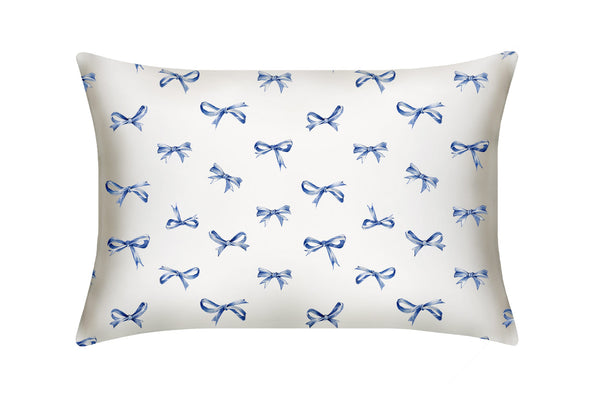
The hand-painted blue ribbon bows elevate it from a standard silk pillowcase, adding a unique, artisanal touch. The 25 Momme silk ensures superior quality and durability.
Not ideal if May not appeal to those who prefer minimalist or non-decorative bedding.
View at Mayfairsilk · £57 - Monstera Variegata PlantShips across Europe

The variegated foliage and dramatic split leaves make this Monstera a standout plant, offering a unique and eye-catching addition to any space.
Not ideal if Requires bright, indirect light and moderate care; may not suit recipients without suitable conditions or those who prefer low-maintenance plants.
View at Be.Green Plant Design · €49 - Personalised Buffalo Leather Notebook with Black EdgesShips internationally

The combination of premium buffalo leather, black-edged pages, and a personalised embossed letter sets it apart from standard notebooks. The gift box adds to its presentation as a luxury item.
Not ideal if Personalisation may limit re-gifting.
View at Design Letters · €67
Picked and ranked for fit to a just-because gift. Written by Eudora, reviewed by Euphora's founder before publication. Full method: how we choose and rank.
Prices from the shops' feeds, 19 October 2026.
That knot in your stomach when you open a gift site and don't know where to start isn't really about the gift. It's fatigue. You've probably already spent real time circling this exact problem, and each new browser tab feels like proof you should have it figured out by now.
Underneath the fatigue sits a sharper fear: that getting this wrong confirms something about who you are. Not that you picked one imperfect item out of thousands, but that you're careless, or that you don't love people as well as you think you do. That fear has nowhere to discharge, because 'just because' offers no occasion to lean on, no deadline, and no relationship-specific rule of thumb to narrow the field.
Here's a detail worth sitting with: no major gift culture has an established script for a no-reason gift either. Christmas, birthdays, weddings: all scripted, all budgeted, all timed. A gift with no occasion attached is genuinely harder everywhere, not just in your head. The problem isn't your judgment. It's the absence of a script telling you when enough is enough.
Relief here doesn't look like a delighted gasp from whoever opens the box. It looks like closing the laptop and feeling the specific lightness of a decision made instead of one still being deferred.
The Unimprovable Gift You're Chasing Doesn't Exist
Somewhere in the search, the goal quietly shifts. You stop looking for something they'd like and start looking for something unimprovable: an item so exactly right it proves you understand this person completely. That standard doesn't exist for anyone, which is why thirty open tabs can feel like progress when they're actually a stall.
Recipients don't grade against that bar. What people remember about a gift months later tends to be warmth and timeliness, not uniqueness or spend. The goal isn't an unimprovable object. It's a gift that actually arrives.
That's a genuinely unfashionable thing to say in an industry built on finding 'the perfect gift.' The obsession with perfect is the product being sold to you, not a solution to the anxiety you're already carrying. Lower the bar to thoughtful and on time, and the decision gets dramatically easier, because you've stopped trying to solve a problem that was never solvable in the first place.
In the Netherlands, an unprompted gift with no explanation can genuinely read as odd, even faintly transactional, rather than sweet: Dutch gift culture runs on discomfort with unearned generosity. A line of context ('I saw this and thought of you') does real work there. Germans solve a similar discomfort differently: even a generous gift gets introduced as 'nur eine Kleinigkeit,' just a small thing. Borrow that trick wherever you live. Downplaying the gift out loud takes the pressure off both people in the room.
Your Cousin's Gift Has Nothing To Do With Yours
Somewhere in your scrolling, you clocked what someone else gave, and now that figure is quietly setting your budget. It's an easy trap, and a completely invented one: you're comparing your relationship to theirs, using a reference point with no bearing on what you're actually trying to say to this specific person.
Ireland runs this fear backwards from what most people expect. The social concept of 'notions' means overshooting is the bigger risk, not undershooting: a flashy gift can embarrass the person receiving it more than a modest one ever would. Germany and the Netherlands land on the same caution from a different direction. An expensive, unprompted gift can create an obligation the recipient never asked for.
The pressure isn't coming from your cousin's last gift. It's coming from the story you're telling yourself about what that gift means. Set your budget from the relationship, before you look at anything else, and don't revisit it once you start browsing.
In the UK, there's a well-worn script for the handover moment: 'oh, you shouldn't have.' Both people usually know it's performance rather than genuine protest. If the moment itself is what you're dreading rather than the choosing, remember the awkwardness is often pre-choreographed by the culture around you, not something you have to manage alone in real time.
A Timer Gets You Further Than Another Hour Of Browsing
More browsing isn't research. It's avoidance wearing research's clothes. Comparing thirty options for three hours feels productive because you're 'doing something,' but the something isn't moving you toward a decision. It's letting you defer the discomfort of choosing at all.
Here's the structural fix, and it works precisely because it removes the open-endedness fueling the loop. Set a budget first, based on the relationship rather than the occasion, since there isn't one. Give yourself fifteen minutes on the clock. Within that window, shortlist three options and commit to the strongest, not the safest. Certainty doesn't arrive before you choose. It arrives after, once the decision's made and there's nothing left to compare it to.
If you're stuck on a specific hard case, someone who's said they want nothing or someone who genuinely seems to have everything, the mechanics stay the same: time-box it, and choose from a short list rather than an infinite one.
Still stuck after your fifteen minutes are up? Tell us about your person and we'll narrow it down for you.
AI reads what you write; our code then picks the gifts. How it works
One Miss Doesn't Mean You're Bad At This
Somewhere back there, a gift didn't land. Maybe it went unused, or the reaction was polite rather than pleased, and after that the story calcified: you're just not good at this. That story does more damage now than the original miss ever did, because it's the reason you avoid the decision altogether instead of simply making a different one next time.
One flopped gift isn't a verdict. It's one data point in a much longer record, most of which you've forgotten precisely because most gifts land fine and get forgotten for it. The skill is showing up consistently, not avoiding every possible miss.
If you've quietly started avoiding gift occasions altogether, that's the story talking, not the evidence.
When you hand the gift over, resist the urge to apologise for it: 'sorry, it's not much,' 'I wasn't sure what to get.' That line hands your anxiety to the other person and asks them to manage it for you. Hand it over the way you'd hand over anything you felt good about, and let it be what it is.
What They'll Actually Remember Isn't What You Think
You're optimising for a moment that rarely happens the way you're picturing it: the gasp, the instant read of exactly how much thought went in. Most recipients aren't running that audit. What they register is whether you showed up at all, and whether the gift carried some sign you were paying attention to something true about them, however small.
What they remember isn't the price tag. It's the fact that you thought of them at all. That's the accurate bar, not a lower one handed to you out of pity. Consistency beats spectacle: a modest, on-time gift given a few times a year does more for a relationship than one agonised-over showpiece that arrives late, or not at all.
Gifts that say 'I noticed'
Chosen because you spotted something specific about who they are — not generic, not safe, just right.

The custom family portrait engraving makes this necklace a one-of-a-kind piece, far more personal than generic jewellery. The waterproof stainless steel ensures it can be worn daily without damage.
Not ideal if This necklace is made to order, so it needs lead time, not a fit for a last-minute gift.
Treats they wouldn't add to their own basket
Small luxuries that feel like a reward — the kind of thing they'd enjoy but would talk themselves out of buying.

Unlike generic moisturisers, this cream combines peptides, bakuchiol (natural retinol), and hyaluronic acid for targeted anti-aging benefits.
Not ideal if Skincare preferences are personal; may not suit those who don’t use anti-aging products.
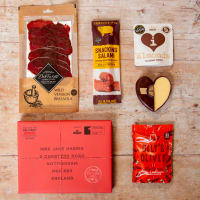
The letterbox delivery eliminates shipping hassles, and the personalised card adds a thoughtful touch. The inclusion of award-winning cheddar and charcuterie elevates it above standard hampers.
Not ideal if Contains dairy and meat, so not suitable for vegans or vegetarians.
Where to shop
Click any shop to preview what they offer.
Their ready-made hampers take the choosing off your plate — pick one and it arrives put together and ready to give.
UK
Browse Real Food HubReliable rather than remarkable, a soap set is the safe, practical choice that ends the search instead of extending it.
UK, US
Browse Scottish Fine SoapsChocolate is the textbook good-enough gift, appreciated without needing to be the perfect one you've been agonising over finding.
Ships across Europe, plus Australia, Canada and New Zealand
Browse Cadbury Gifts DirectQuestions people ask
Why do I feel so anxious about buying gifts?
Because the fear underneath it usually isn't about the object at all. It's about what a 'wrong' choice might say about your character. A no-reason gift has no occasion, deadline, or established custom to lean on, so that fear has nothing to bump against and just keeps circling.
How do I stop overthinking every gift choice?
Give the decision a deadline and hold yourself to a shortlist of three, no more. Every option past three doesn't add clarity, it adds new reasons to second-guess whatever you were about to pick, which is why more browsing rarely produces more confidence.
What do I do if I have no idea what to get someone?
Start with one true detail about them rather than a category of gift: a habit, a small complaint they've made, something they mentioned wanting and then talked themselves out of. One detail is usually enough to generate three workable options, which is more than you actually need.
What if I get the wrong gift and they're disappointed?
Most reactions are milder and shorter than the one you're picturing. In places like the UK, the visible response ('oh, you shouldn't have') is often a shared script rather than a real verdict on the gift itself. A slightly-off gift is rarely remembered as vividly as you fear; it's one exchange inside a much longer relationship.
Is it normal to dread gift shopping?
Yes, and it's far more common than the cheerful gift-guide industry lets on. The dread usually isn't about taste. It's about the identity-level stakes people quietly attach to the decision, and naming that stake out loud is often enough to loosen its grip.
How much time should I actually spend choosing a gift?
There's no fixed figure for spontaneous, no-occasion gifts specifically, but the framework in this guide holds regardless: fifteen focused minutes with a firm budget beats several unfocused hours, every time. Time spent past that point tends to go toward doubt, not decision quality.
You still have to pick something. But the panic that sent you here, the tab-hoarding, the waiting for a sign, the score you imagined everyone else was keeping, most of that was never coming from the gift. Set the budget, give yourself fifteen minutes, and let good enough do what it's always done: land warmly, arrive on time, and get remembered for exactly the right reasons.
Euphora helps you find the right gift — with tailored recommendations, gift guides, and specialist retailers we've vetted ourselves.