Gifts for Someone Who Returns Everything: A Decision Guide
You've tried thoughtful, expensive, and deeply personal, and all three have gone back to the shop. That's not bad luck. It's a pattern, and once you can name it, Christmas shopping for her stops being a guessing game. This guide works through four reasons a person returns almost everything she's given, and which category of gift actually works for each one, all landing between £20 and £80.
Top picks for UK delivery
Euphora earns a commission when you buy through these links, at no extra cost to you. How we're paid
- Pachira Aquatica — Money Tree (1.5–2m)Ships across Europe
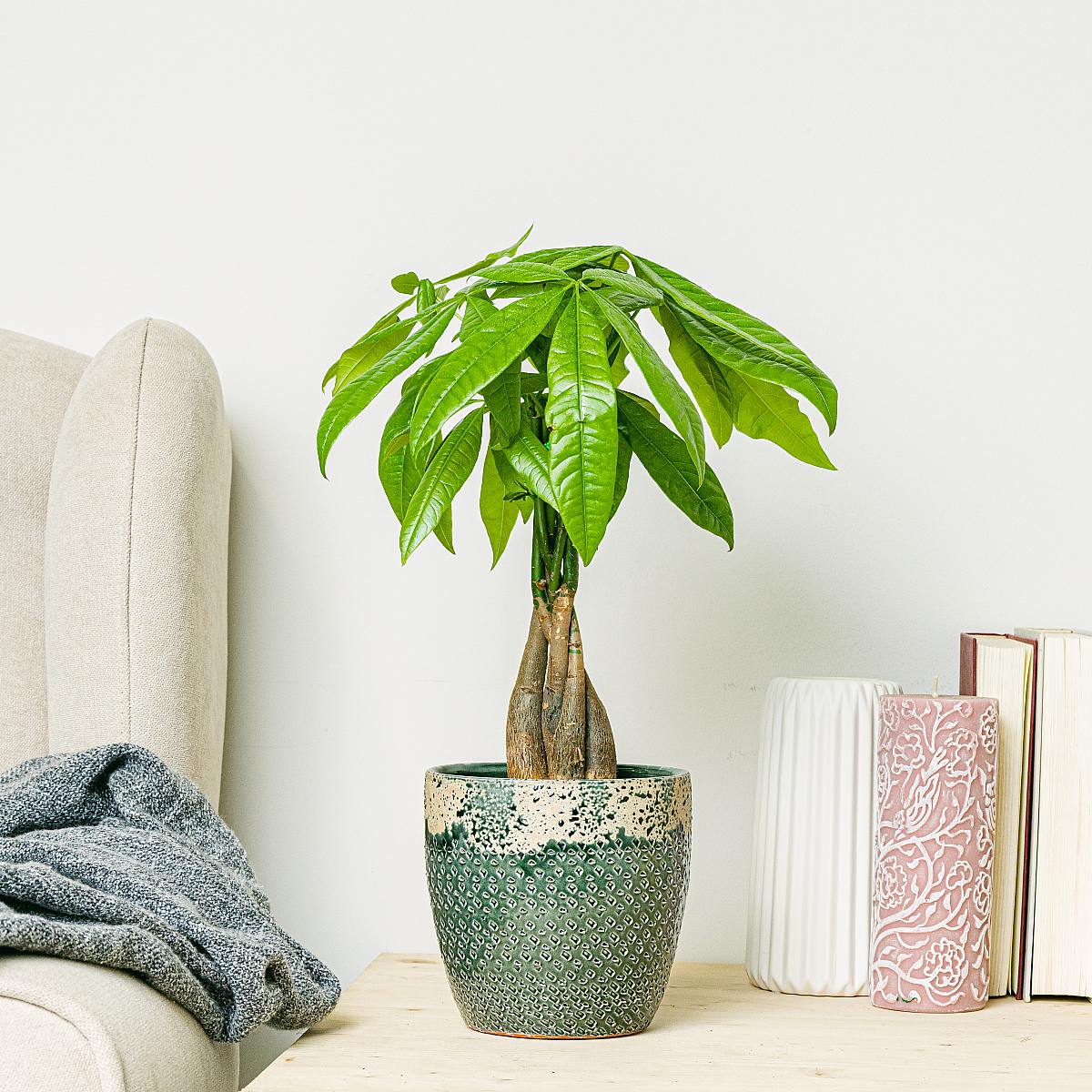
Stands out with its braided stem and air-purifying qualities, offering both aesthetic appeal and functional benefits.
Not ideal if Size may be impractical for small spaces.
View at Be.Green Plant Design · €40 - Professional Italian Truffle Shaver with Rosewood HandleShips internationally

Stands out with its hand-crafted Italian design and adjustable blade, offering precision and versatility for shaving truffles, cheese, and more. A hand-crafted Italian kitchen tool featuring a rosewood handle and adjustable stainless steel blade designed for shaving truffles paper-thin.
Not ideal if The blade requires careful handling to avoid injury.
View at TruffleHunter · £39.95 - Cream Glazed Stoneware Mug SetShips to UK

The reactive glaze and hand-painted details make each mug one-of-a-kind, offering a personal touch without customization. A set of two cream glazed stoneware mugs with an organic shape and hand-painted details, featuring unique reactive glaze effects from the kiln.
Not ideal if Fragility of stoneware may require careful handling, and the unique glaze effects might not appeal to those preferring uniform, minimalist designs.
View at nkuku · £28
Picked and ranked for fit to a mother at Christmas. Written by Eudora, reviewed by Euphora's founder before publication. Full method: how we choose and rank.
Prices from the shops' feeds, 19 October 2026.
The pattern hiding inside every return
Every returned gift carries information, and most families never read it. A jumper that comes back might mean the size was wrong, or it might mean nothing wrapped could have satisfied her that particular week. The two problems look identical from where you're standing, wrapping paper in hand, and they call for completely different gifts.
Four patterns explain almost every serial returner. She might be a perfectionist who wants the final say over what enters her wardrobe or her home. Or she might be a declutterer, actively resisting more objects regardless of quality. She might be a control-seeker, for whom returning is a small errand that keeps her calling the shots. Or she might be genuinely never-satisfied, where the bar moves regardless of what's given and no single object was ever going to land.
None of these are about you. A return is rarely a verdict on the giver's effort or taste. It's closer to a data point about her needs that's been sitting there, ignored, for years.
Work out which pattern fits before you shop. The rest of this guide treats each one separately, because the fix for a perfectionist, handing her the choice, is close to the opposite of the fix for a declutterer, giving her nothing to store at all.
In Germany, vouchers already narrowly top the Christmas gift list (29% in the German retail federation's 2025 survey). Return culture there isn't a failure state; it's the default. The UK, Ireland, the Netherlands and Germany all give a legal 14-day cooling-off right on most online purchases, so a recipient there has formal room to send something back. In the US, Canada, Australia and New Zealand, change-of-mind returns depend on the shop's own policy. None of that makes a returned gift sting less, but an entire culture has already normalised the solution this guide is walking through.
She returns anything that isn't quite right
This is the mother with exacting taste, and precision doesn't always look gracious from the outside. She'd rather own nothing than the wrong shade sitting in her wardrobe as a quiet obligation, and she's genuinely puzzled that everyone treats a return like a big deal.
The mistake here is escalating: a nicer version of the same cardigan, a pricier version of the same idea. If the category itself keeps bouncing back, upgrading within it won't help. What she wants is control over the final decision, not a better guess at what she'd choose.
Hand her the choice directly. A gift voucher for a shop she already visits reads as trust, not as giving up, especially paired with a specific note about why you picked that shop. If you want something wrapped and physical instead, go custom-made rather than retail: something made from your own family's materials, a child's handwriting or a photo turned into a keepsake, has no shop-shelf version to compare it against, so there's nothing to send back.
She says she has enough stuff already
For this pattern, the objection was never about taste. It's about volume. Every extra object is one more thing she has to store, dust, or eventually decide what to do with, and a gift that adds to that pile fails regardless of how well-chosen it is.
Experiences and consumables solve a different problem than the perfectionist's, which is why swapping in a nicer physical gift won't help here either. The goal isn't a better object. It's the absence of an object at all.
Choose something that gets used up: a good bottle for the day itself, a jar of something she'd actually cook with, a candle that burns down over several weeks instead of sitting on a shelf as a decision she has to keep making. Time together works just as well, a shared afternoon rather than another thing to find room for. None of it enters her cupboards.
If a category keeps coming back, the fix isn't a better version of it. A softer cardigan after the first one was returned just gives her a second decision to make. Notice what's bouncing back and switch categories entirely, rather than upgrading within one that clearly isn't working.
Returning it is basically an outing for her
For some mothers, taking something back to the shop isn't a chore. It's a structured errand, a reason to be out, a small moment where she's the one making the call rather than reacting to someone else's choice. The gift itself is almost beside the point.
Giving a gift card here can feel like admitting defeat, especially after years of trying to prove how well you know her. It isn't defeat. It's giving her exactly what she's been asking for the whole time, minus the detour through a shop and a queue.
Give a voucher or gift card warmly and specifically, tied to a shop she goes to anyway or an experience she's mentioned wanting, and say so out loud. The specificity is what makes it read as thoughtful rather than a fallback.
Nothing ever quite lands, and that's not about you
It isn't a fixable problem so much as a mood you can't out-shop. The bar moves depending on her week, her weather, or something entirely unconnected to the gift itself, and chasing the one object that finally satisfies her turns into a losing game dressed up as a solvable one.
Most people respond by trying harder each year: bigger, more personal, more expensive. None of that changes a pattern that was never really about the gift.
Lower the stakes on your end. Choose something affordable and low-drama, a plain bracelet, a simple pair of studs, something with little room to disappoint because it never tried to say too much. Then, separately from the gift itself, have a low-key conversation about what she'd actually find useful. That conversation will do more than a fifth Christmas of escalating effort.
Quick decision rules
In Ireland, an overly generous or flashy gift for a mother can trigger the same quiet exchange as a badly chosen one, thanks to 'notions', the social instinct against showing off. In the UK, a gift receipt tucked into the box is not an insult either. Restraint reads better than ambition in both places.
Treats they wouldn't add to their own basket
Small luxuries that feel like a reward — the kind of thing they'd enjoy but would talk themselves out of buying.

Stands out with its reusable porcelain cup, which adds long-term value beyond the candle itself. The matte-glazed design and engraved stripes give it a modern, sophisticated look.
Not ideal if Fragrance preferences are subjective; the recipient may not love the chosen scent.

The key-shaped pendant stands out for its symbolic meaning and elegant design, combining sterling silver with zirconia for a touch of sparkle. The choice of finishes adds versatility.
Not ideal if Jewellery preferences vary; ensure the recipient enjoys delicate, symbolic pieces.
The inclusion of a bone china mug and a long-lasting candle elevates this set beyond a standard food hamper, adding a touch of elegance and practicality. A curated gift set featuring salted caramel and clotted cream fudge, a bone china mug, and a 30-hour tin candle, presented in a luxury black gift box.
Not ideal if Contains dairy (fudge) and may not suit recipients with dietary restrictions.
Still not sure which pattern fits? Tell us a bit about her and we'll narrow down the category that actually works.
AI reads what you write; our code then picks the gifts. How it works
Where to shop
Click any shop to preview what they offer.
A creative kit gets used and finished rather than kept on a shelf to judge, sidestepping the fit problem that sends most gifts back.
Ships worldwide
Browse Craft Buddy ShopPersonalising a piece to her birth flower or zodiac sign removes the guesswork that usually gets a gift sent back.
Ships worldwide
Browse Hey HappinessOne well-chosen bottle gets opened and enjoyed rather than parked in a cupboard awaiting a return.
Ships across Europe
Browse 8wines UKGourmet oils and hampers get used in the kitchen, not held onto out of obligation, which suits someone who sends almost everything else back.
Ships worldwide
Browse TruffleHunterQuestions people ask
What do you buy someone who returns everything?
Start by identifying why she returns things rather than what she's returned. Someone who wants control over her own choices needs a voucher or something made-to-order. Someone avoiding clutter needs a consumable or an experience. Shopping more carefully within the same category rarely fixes a pattern that isn't really about the object.
Why does my mum return every gift I buy her?
It's rarely about you specifically. In some cultures, saying a gift isn't quite right is treated as honest rather than rude, the Dutch, for instance, tend to see a returned or exchanged present as ordinary communication rather than an insult to the giver. Read the pattern as information about her, not a scorecard on your effort.
What gifts can't be returned?
Anything consumed rather than kept sits outside the normal returns cycle: food gifts, drink, things burned down or worn out over time. Personalised or made-to-order pieces work on the same principle, since there's no standard version on a shelf to exchange it for.
Are experience gifts better than physical gifts for someone picky?
Often, yes, because taste can't be mismatched if there's no object to mismatch. A cookery course, a spa afternoon, or theatre tickets remove the sizing and style guesswork entirely. The trade-off is that experiences take more planning around dates and availability than a wrapped box does.
Is it rude to give someone a gift with the receipt included?
Not in the UK, where a gift receipt is a normal courtesy. In Germany and the Netherlands, gifts are typically opened immediately in front of the giver, which makes a visible receipt feel more like foresight than doubt. Ireland is the exception worth knowing: a receipt paired with an obviously expensive gift can read as showing off rather than helpful.
How do I stop feeling hurt when my gift gets returned?
Separate the return from your effort. A returned gift is closer to feedback about fit or need than a comment on how much you love her, even when it doesn't feel that way in the moment. Naming the pattern to yourself, rather than trying to overcome it with the next purchase, tends to lower the sting faster than any single gift can.
A returned gift was never really a verdict on you; it was a clue you can finally use. Diagnose the pattern, match the category to it, and let the rest go. The real win this Christmas isn't a gift she keeps forever. It's one that doesn't send her back to the shop at all.
Euphora helps you find the right gift — with tailored recommendations, gift guides, and specialist retailers we've vetted ourselves.