The Re-Gifting Rules Nobody Says Out Loud
You're standing over an unopened candle set wondering if passing it on makes you a bad person. It doesn't. Most people already do this quietly and would never admit it. The real question isn't whether to re-gift, it's who's safe to give it to and what kind of object you're holding. This guide answers both, and shows how the rules shift from one country to the next.
Top picks for UK delivery
Euphora earns a commission when you buy through these links, at no extra cost to you. How we're paid
- Cadbury Ultimate Celebration Chocolate BasketShips internationally

The combination of a large assortment of Cadbury classics and a personalised gift sleeve elevates this hamper above standard chocolate boxes. The wicker basket adds a premium, ready-to-give feel.
Not ideal if Contains dairy; may not suit recipients with dietary restrictions or those who prefer artisanal chocolates.
View at Cadbury Gifts Direct · £70 - Gold Jewellery Surprise Box with 4 PiecesShips internationally

The curated set of four pieces sets it apart from single-item jewellery gifts, offering variety and excitement in one box.
Not ideal if The surprise nature means the recipient’s taste in jewellery may not align with the curated selection.
View at Hey Happiness · €45.90 - Handmade Milk Chocolate Box with Floral & Bee DesignsShips to UK
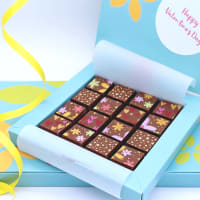
The charming bee and floral decorations set this chocolate box apart from mass-produced options, adding a touch of whimsy and craftsmanship. A beautifully presented box of 16 handmade milk chocolate blocks, decorated with bees, flowers, and stars.
Not ideal if Chocolate may melt if not stored properly.
View at Real Food Hub · £16.50
Picked and ranked for fit to a just-because gift. Written by Eudora, reviewed by Euphora's founder before publication. Full method: how we choose and rank.
Prices from the shops' feeds, 19 October 2026.
Distance Decides More Than Guilt Does
Re-gifting isn't rare and it isn't shocking. What sinks it is proximity: handing an item to someone who'll see the original giver at Christmas, at a wedding, or over a pint within the next few months.
Map the social distance before you touch the object. Ask who else might hear about this gift before it changes hands. A colleague two departments over is usually safe. One who sits three desks from the person who bought it is not. A cousin who only sees your side of the family at your gran's birthday is safer than a sibling who shares a group chat with the original giver.
Germany and the Netherlands raise the stakes further: gifts in both cultures are typically opened immediately, in front of whoever gave the last one, if that person happens to be present. A re-gift recognised in the moment of unwrapping is a much bigger problem than one discovered weeks later through a passing comment. If there's any chance the original giver will be in the room when this gets opened, that's your answer before you've even checked whether the item still has its tags.
In the UK, re-gifting is common, and 40% of people say they have done it. The taboo has never really been the act, it's getting caught. Gift receipts are so normalised in the UK that quietly returning or exchanging an unwanted present barely raises an eyebrow, which is the same instinct as re-gifting, just with a receipt attached instead of a new recipient.
The Object Decides, Not the Occasion
Some items are built for a second life. An unopened box of chocolates, a book still in its shrink wrap, a set of coasters nobody asked for: these carry no fingerprints. Nobody buying them expected a personal story attached, so passing them on adds no dishonesty that wasn't already there.
Handmade, monogrammed, or engraved items don't get the same pass, no matter how little they suit you. A scarf someone knitted, a mug with your initials on it, a photo frame with an inscription: the value was never in the object, it was in the time someone spent making or personalising it. Re-gifting one of these isn't a grey area. It stays with you.
Value mismatch causes its own kind of trouble. In Ireland, the concept of 'notions' covers exactly this: an item that reads as too flashy for a casual gesture invites accusations of showing off, and one that reads as too cheap for a milestone occasion invites the opposite complaint. Britain has its own version: a generic supermarket gift set works fine for a Secret Santa with a budget of around a tenner. Hand the same set to a partner for their birthday, though, and it reads as an afterthought, whether you bought it new or found it in a cupboard.
Some items carry a meaning that depends on the country, whatever the relationship. In Britain, white lilies read as funeral flowers. Chrysanthemums read as cemetery flowers in France and Belgium. In Britain, an old superstition, fading but not gone, says a blade given without a coin cuts the friendship. Red roses read as romantic: giving a re-gifted bunch to a colleague or a host sends a message you didn't intend.
If this particular item just failed the test, don't force it. Tell us who it's for and we'll help you find something that actually fits, without needing to explain where it came from.
AI reads what you write; our code then picks the gifts. How it works
Saying It Out Loud Is Sometimes the Safer Move
Honesty works better than most people expect, but only in relationships that can hold it. Telling a close friend 'I got this and immediately thought of you' turns a re-gift into a compliment instead of a confession. The mistake is over-explaining: leading with 'this is a bit weird, but...' manufactures the exact awkwardness the honesty was supposed to avoid. Say it plainly, once, and stop talking.
Ireland has been moving in this direction for a while. Reframing a passed-on item as something you found and thought of them is increasingly treated as charming rather than cheap, provided the item still fits the occasion. Germany offers a different kind of cover: the self-deprecating phrase 'Kleinigkeit,' meaning 'just a small thing,' works for any gift and quietly lowers the stakes on a re-gift without anyone needing to ask where it came from.
Britain and the Netherlands sit at opposite ends of how this gets received. British gift-receiving involves a ritual protest: 'oh, you shouldn't have,' performed more or less regardless of how the recipient feels. Dutch directness skips the performance entirely. 'I don't need this' is a normal, unoffended response, which makes honest re-gifting lower-risk in the Netherlands than almost anywhere else in this comparison.
More treats to consider
More indulgences worth considering — different moods, same impulse.

Alocasia Cuprea Red Secret — Compact Tropical Houseplant
€42from Be.Green Plant DesignShips across EuropeThe Alocasia Cuprea’s metallic, arrow-shaped leaves set it apart from common houseplants, offering a rare and sophisticated aesthetic. A striking tropical houseplant with metallic, arrow-shaped leaves in deep burgundy and copper tones.
Not ideal if The plant requires specific care (e.g., humidity, indirect light) and may not thrive in all environments.

Unlike typical vacation stories, this novel is narrated by a dog, offering a fresh and hilarious perspective on human behavior. The humor and charm make it stand out from more conventional family or travel-themed books.
Not ideal if Taste in humor can be subjective, so it may not appeal to those who prefer more serious or dramatic literature.

Kindred Spirits Crystal Art Scroll Kit — Anne Stokes 40×50cm
£10.39from Craft Buddy ShopShips internationallyFeatures Anne Stokes' distinctive fantasy artwork, elevating it beyond a generic craft kit. The scroll format adds a unique display element.
Not ideal if Requires patience and attention to detail; may not appeal to those who prefer instant-gratification gifts.
The Environmental Argument Is the Strongest One Nobody Uses
An unopened item sitting in a cupboard for a year isn't neutral. It's a slow trip to landfill, and pretending otherwise doesn't change where it ends up. Passing it on to someone who'll actually use it is simply the more responsible outcome — that's what generosity actually looks like when it's honest about where the object came from.
The Netherlands has a cultural head start here. Zuinigheid, a genuine value around frugality and not wasting things, means a re-gifted item lands as sensible rather than suspicious in a way it might not elsewhere. Nobody's impressed by waste in Dutch gift culture, and nobody's especially bothered by a gift with a past.
Here's the unpopular part: buying something new specifically to avoid the discomfort of re-gifting is the real shortcut, not the other way round. It skips the harder, more honest question: was the item in your cupboard ever wrong for you, or just wrong for the moment you received it. Sometimes it's neither. It might simply be better suited to someone else, and no shame needs resolving before you hand it over.
The Five-Minute Check That Prevents the Bad Kind of Surprise
Most re-gifting disasters aren't caused by the item, they're caused by what's still inside the box. Gift receipts, cards with the original giver's handwriting, price tags, even a note tucked into the tissue paper: check every seam before you rewrap anything. This takes five minutes and prevents the single most common way people get caught.
Presentation matters more in some places than others. German gift culture expects wrapping to look considered, not rushed, so a re-gift wrapped sloppily draws more attention than the fact it's a re-gift at all. The Netherlands goes further in the opposite direction. At Sinterklaas, some families wrap gifts in a 'surprise,' an elaborately disguised parcel, so hiding an object's shape is part of the fun, not a red flag.
If you're mailing rather than handing something over, shipping between EU countries is generally fast and free of customs friction, while post-Brexit shipments from Britain into the EU can face delays or extra charges. Factor that into timing if the item is crossing a border, not just a room.
In the Netherlands, Sinterklaas gifts sometimes come with a gedicht, a short, personalised, teasing poem written for the occasion. Writing a fresh one for a re-gifted item gives it a new story without any real deception involved, since disguising a gift's origin is already part of the tradition.
Where to shop
Click any shop to preview what they offer.
A food hamper sits in the safe middle ground here: thoughtful enough to give directly, generic enough that it was never really tied to one specific person or day.
UK
Browse Real Food HubBoxed and sealed rather than personalised, a soap set is exactly the kind of item that travels cleanly to a different social circle if it never gets opened.
UK, US
Browse Scottish Fine SoapsAn unpersonalised box of chocolates carries no trace of who it was meant for first, sitting squarely in the safe end of the spectrum.
Ships across Europe, plus Australia, Canada and New Zealand
Browse Cadbury Gifts DirectChoosing a book tied to their specific interests is the opposite move entirely — proof it was never something sitting in a cupboard waiting for an occasion.
UK
Browse Bookshop.orgQuestions people ask
Is it rude to regift a present?
No, and treating it as a character flaw misses the point. Re-gifting isn't a verdict on the person who gave you the item; it just means it wasn't right for you, which happens constantly and says nothing about their judgement or yours. What actually causes offence isn't the re-gift itself, it's a re-gift that reaches someone in the original giver's circle, or one that's badly mismatched to the occasion it's given for.
What should you never regift?
Anything that carries someone else's personal effort, or a symbolic meaning that doesn't shift with the occasion. That covers two different risks: items made or personalised specifically for you, and items loaded with cultural meaning that varies by country, which the categories and warnings above cover in detail. When in doubt, treat the object as a signal rather than a gesture, and ask what it communicates on its own, separate from who happens to be holding it.
How do you regift without getting caught?
The physical checks are straightforward, and the checklist above covers them well. What people miss is that a re-gift can just as easily get caught online. If the original giver might see a photo of their old present resurface in someone else's story, or hear about it secondhand through a shared group chat, that counts as being in the room. Digital exposure is now at least as common as getting caught in person.
Can you regift an unopened present?
Usually, yes, but unopened isn't automatically risk-free. Check the box for a retailer sticker or a visible purchase date that might tie it back to a specific shopping trip the original giver mentioned, especially if you're passing it to someone in the same friend group. An intact seal tells you the item is clean. It doesn't tell you the packaging is.
Is it ok to regift within the same family?
It depends entirely on which family member. Extended family who only overlap at big annual events, like a grandparent's birthday, are usually safe. Immediate family and anyone on a shared gift list for weddings or Christmas are the riskiest possible recipients, because family circles assume information travels, and gift lists get compared more often than people expect.
How long should you wait before regifting something?
Time elapsed matters less than most people assume. Waiting six months doesn't make an engraved item safe to regift, and handing something over the same week you received it is fine if the recipient is genuinely outside the original giver's circle. The one hard exception is Germany, where giving any gift ahead of an actual birthday date is considered bad luck rather than thoughtful, regardless of how long you've been sitting on it.
The guilt you started with was never really about the object. It was about what re-gifting might say about you if someone noticed. Handled with a little social awareness and a five-minute check of the packaging, nobody notices, and there's nothing left to notice anyway. The thing sitting in your cupboard was never wrong. It was just waiting for someone who actually needed it.
Euphora helps you find the right gift — with tailored recommendations, gift guides, and specialist retailers we've vetted ourselves.